
Season 02 | Episode 12: Bridging Technology and Accessibility with Lauren Hedges
In this episode: Join David and Sandi as they explore the intersection of technology and accessibility with Lauren Hedges, Managing Director of Hackforge. We learn more about their Accessibility Week initiatives and the power of community-driven tech solutions.
Transcript
David: Welcome back to Practical Accessibility Insights, the podcast that brings you tips and tricks on expanding your business and making it more inclusive to a larger market. I’m David Best, and with me is my co-host, Sandi Gauder. Hi, Sandi.
Sandi: Hi, David. How are you today?
David: I’m doing good. And this is a, an exciting podcast we have for this episode because we are interviewing someone who is local and that I have worked with a great deal and admire.
So at the end of May, the last week of May every year has been declared the National AccessAbility Awareness Week, which was established by the United Nations back in 2017, and most countries celebrate it. So communities across Canada will have all kinds of different events to highlight what organizations are doing in their community to become more inclusive.
In Windsor, we hosted a special event, and it was all organized and hosted by Hackforge. And Hackforge is a local tech community that wants to bring people together where innovation and creativity come together, and through that collaboration, we can get a greater level of understanding and getting people to work together so that we have tech entrepreneurs and disabled people starting to understand how we all operate within our own world.
So Sandi, why don’t you go ahead and introduce our guest for this episode?
Sandi: I would love to. Thank you, David. So for this episode of our podcast, I’d like to welcome Lauren Hedges. Lauren is the managing director of Hackforge, and she’s here to tell us a little bit more about the organization and the event that happened during National Accessibility Week.
So welcome, Lauren.
Lauren: David, Sandi, thank you so much for having me. I am very excited to be here and to be talking to the both of you.
Sandi: First of all, can you just tell our listeners a little bit more about who you are, maybe a little bit more about Hackforge and what happens there?
Lauren: Absolutely, yeah. So Hackforge is a pretty small nonprofit.
We’ve been operating since about 2012. I have been in my role since 2022. I was originally brought into the organization by the board during COVID to help with the social media and figure out how to move some of the programming online. It’s been a really great opportunity to engage with Hackforge back when I was a student attending the University of Windsor.
I was studying digital journalism with communications, media, and film. So one of my first major engagements with Hackforge back then was to develop and help run a hackathon that focused on open data and digital journalism. So we put together teams that were comprised of journalism students, data analysts or technologists, and graphic designers to put together a cool data story about whatever they wanted using available open data.
So I learned a lot from doing that, and it was a really great opportunity for me to meet other people and learn about different ways that technology and data are really used throughout modern life, right? We’re recording this podcast right now from very different areas, all in our own offices, and we’re able to do that because of technology.
No matter what role you work in anymore, tech is part of it, and that’s really what I have brought to Hackforge as I’ve kind of taken on more responsibility here at the organization. So overall, Hackforge’s goal is to build community with and around technology. So we invite people who work with or are interested in any type of technology and in any capacity to engage with us.
Our regulars include students and hobbyists. We’ve got early career professionals, folks who are well established in their roles, as well as some who have been around for so long that they have retired from their tech careers, and that’s just as cool to see and experience. So all of our programming is free to attend, and we cover a lot of topics.
We have groups that meet regularly to discuss topics like Linux, data analytics, artificial intelligence, or GIS. And our programming is delivered in various formats, and part of that is to make it as accessible as we can for as many people as possible. So we do have space in downtown Windsor where we meet regularly.
The majority of our events happen here in person. A good number of those are also streamed via Zoom, so we call those hybrid events. And then sometimes we have events that are strictly online, so we will have guest speakers from out of town, for example, and they will come and run a presentation or a workshop or whatever it may be, uh, just through Zoom.
David: Lauren, you said you are the Managing General Director for Hackforge, and Hackforge is a nonprofit group which I understand you spend a lot of time with, but that’s not your paid job. Is that right?
Lauren: So I am paid to work with Hackforge, but it is not a full-time position. I like to call it my afternoon job because it’s a little bit more than just my evening job.
It’s more than a side hustle. Because of the nature of nonprofits, it’s also not my full-time gig. My day job, my morning job, whatever you wanna call that, I work with Parallel 42 Systems. So that is a boutique tech consulting agency also located in Windsor. My role there is varied. I think these days we’re using the title Program Manager.
So I provide tech consulting services to businesses and nonprofits. I help to design software solutions and manage the process of developing and implementing those custom solutions. There’s a lot of, I think, crossover that you can see between the two. Education is a big part of it, helping people make the most out of technology, and just finding ways to improve processes and improve everyone’s ability to really engage with our technological world that is 2026.
Sandi: Are other organizations similar to Hackforge across the province in Ontario, across the country, or is it kind of a unique organization that’s in your area?
Lauren: That’s a really interesting question, and I think that Hackforge shares some commonalities with a number of different kinds of groups. So if somebody who is not in Windsor was interested in finding a group like this, I would recommend that they look for maker spaces and civic tech groups.
I also recommend taking a look at Code for Canada. They act as kind of a national umbrella organization for civic tech organizations across the country. But there are smaller and sometimes less formalized options as well. Even if you just go to something like Meetup or Eventbrite and type in technology you’ll probably find something, and from there you’ll be able to learn and find more.
Sometimes these groups are ad hoc. They might have a Discord or a Slack or a WhatsApp, and that’s mainly how they communicate with each other. They’re not always necessarily as formalized as Hackforge.
Sandi: So can you tell us about this event that you had with National Accessibility Week and just how it came to be in the first place, and what happened during the event, and what was the outcome?
Lauren: Absolutely. Yeah. I think David will have some good insight on this one as well. This was the third year that David and I partnered to put together some Accessibility Week programming. What we did for National Accessibility this week, so for year three, we slowed it down a bit. In the past, I’ve done, like, booked one event every day for a whole week, and that was…
It was great. We got some really, really good content out of it. I’ve always learned a lot. This time we tried to approach things a little bit differently with the idea of wanting more practical outcomes. The goal, as we stated, is always to explore the intersection of technology and accessibility, and in the past, this has generally been theoretical with a little bit more software base to it.
So we will explore things like what does accessibility mean in terms of a website? If you are a web developer, what should you keep in mind? So what we envisioned for this year was connecting folks who live with disabilities with folks who are creative and innovative thinkers, whether you’re someone who likes to make hardware, or someone who likes to build software, or you just like to think about crazy ideas.
We wanted to get all those people in a room so that those innovative thinkers could hear directly from folks who live with various accessibility issues and have them explain some particular challenges that they face every day that other people might not even consider. So in our first event, we had David and a newcomer actually, Jason, who this was his very first Hackforge event that he chose to attend, and he was just kind of interested to see what it was about.
And he’s only been in the city for a few months, and I think he said one of the things he wanted to do was practice his English. Great. Awesome. Love it. Come out and join us. So he heard from David some of his experiences. Navigation was a big one. We all learned actually a lot from David in that one, more about how audible crosswalk signals work or don’t work.
And all of this just really like triggered something in Jason, and he took what he heard from David and applied his innovative thinking and code development skills over the course of the week. And then on Saturday, he showed us an app that he had built, it was just a prototype, but still, that was focused on providing navigation services for folks with visual impairment.
And what he really wanted it to focus on was providing different route options to get from A to B, and then scoring those routes based on how accessible they are. And how accessible a route is was based on various things like how many times you need to cross the road, and whether or not those crossings are labeled as having audible crosswalk signals, which is great.
And the app is also optimized to be used on a phone in accessibility mode, which is super cool. It’s not all there yet, ’cause like I said, what he showed us was built over the course of five days, but it was really amazing what he was able to put together and we are now, um, working with him on how we can move that project forward.
So that includes bringing other people from the Hackforge community into it, connecting David as well as Jason with other people who would be potential users of this so that they can give their feedback on it as well. So that was a really, really cool outcome. We also built an accessibility directory or the beta or pilot version of the accessibility directory.
So what we did was a month or so leading up to our week of programming, we released a survey asking folks for their accessibility experiences in the area. So for example, have you been to a restaurant that offers their menu in braille? Have you been to a local gym where the staff are actually fluent in sign language?
These are things that are not always advertised and people aren’t gonna know about them. And also make it easier to really reliably know what is a bar that you can just go to with your friends after work one day that you know you’ll be able to fit your wheelchair into the bathroom. So we received some input through that survey and then through other information that just our staff already had in the office, or we asked some of our friends who run businesses to get their information.
We put it all together into a page on our website that is searchable and sortable and organized so that you can get a sense of whether or not a location provides accessible parking and barrier-free entrance at the front door, but then are there steps inside? Like all of these different aspects. So it’s tough because we’re trying to cover as many potential obstacles as possible without it being, like, huge and you have to read a whole book on every location.
Sandi: How do you get these projects funded? Like, the directory is obviously time and resources. The Idea Jam, or at least the outcome prototype that Jason developed, I mean, it takes time and money to build these out. So does Hackforge support Jason so he can take this further, or any of the projects that you do in Hackforge, how do you move it forward and not let this idea just fall flat?
Lauren: Oh, what a great question. Creatively, that’s how. There are a few different ways that we’ll go about these things. With Jason in particular, we’re working with him to try to find funding opportunities that he can try for. So in some cases, because he’s an individual, he’ll be better suited to apply on his own to get funding for it.
In other cases, because we’re a nonprofit, we would be better to apply on his behalf to get funding for it. So we kind of work together to see what we can find to apply for to get that funding to then grow it. The directory, that one was just funded by our usual staff hours, but between the three of us, we’re able to, you know, have a few hours a week here and there to get other things done because that is what, that is what Hackforge is about, is using technology to improve the community, and that can mean so many things.
It can mean person-to-person connections, but it can also mean providing tools for people, right? We do have an offering that we sell. So through our program called the Tourism Innovation Lab, we work with municipalities, regional tourism organizations, groups like that, to put on mentorship and grant programs.
So what happens there is our partner will pay an amount to Hackforge to run this program. So from that, we’re able to kind of eke out enough to be able to build out some of these other sample projects and products with the hope that eventually that attracts more funding from elsewhere or other people who want to come in and volunteer their time to build things out.
So it all really eventually ties together by giving these, you know, distinct groups one place that they can each do their own thing, but then behind the scenes I’m able to see all the different things that they’re doing and form those connections between them. They can then come together and we can build something even bigger, right?
Sandi: Your organization is doing some really cool stuff around accessibility, and it seems a shame to keep it in Windsor-Essex. Especially around the accessibility stuff, and I think David and I talk about this an awful lot, is, is we need to get accessibility into the mainstream. We tend to, as accessibility specialists, live in our little silo of accessibility, but what we really need to be doing is talking to people who live outside that silo, and Hackforge is like the perfect example.
These are tech people who don’t necessarily work in the digital accessibility sector, but- are now learning about it, are now applying what the skills they have to solving accessibility problems. So it’d be so amazing to have Hackforge replicated all over the place.
Lauren: Well, it, it absolutely has been mentioned that we should have more Hackforges everywhere.
Some people love that idea, some people hate that idea. For some folks, part of the charm of Hackforge is it’s kind of like hyperlocal focus. But then, like you said, Sandi, we’re doing cool things, so why not open that up to as many people as possible? For right now, we just don’t have the resources to necessarily…
In the meantime, you know, we’re doing what we can. That’s part of why we do offer as much of our programming as possible in the hybrid format or available online, so folks can still engage with us that way, so that folks elsewhere can replicate that sort of thing. And when we ran our accessibility programming last year, we did bring in speakers from different parts of the country.
So we had a talk from the CELA, the Center for Equitable Library Access. But something really awesome that we have coming up this year, actually, so I am right now working with Destination Northern Ontario, so to offer the Spark Mentorship and Grants program specifically targeted towards accessibility in Northern Ontario.
So what’s happening is we’re inviting tourism entrepreneurs, whether you’re somebody who already is running a tourism business, whether you are a, maybe a restaurant, you could be a, a sporting outfit, you could be lodgings, whatever, something that people from out of town might engage with if they were to come.
Whether you’re new to that, have something established, or like brand new, haven’t done this at all before, bring us your idea for accessible tourism, and we will be going through our applications, ultimately deciding on the recipient of seed funds and mentorship to help improve accessible tourism in Northern Ontario, which I think is really cool.
This is like the perfect kind of, like, synergy of all the different Hackforge things that I want to see. So for part of this, we’re going to be running a webinar that will, that will be public, open to anyone to learn about an aspect of digital accessibility. That is real value that we’re providing, targeted specifically to Northern Ontario, but that folks from all across Canada or elsewhere would be able to, to benefit from.
David: What’s the role of the municipality in supporting organizations like Hackforge in trying to bring the community together for greater prosperity and inclusion?
Lauren: Great question, and it’s tough because I can only speak to my experience in my area. It might be different in other municipalities, but everything that we at Hackforge are doing in terms of accessibility, we are doing without direct support from our municipality.
We have reached out in the past to try to connect with our accessibility advisory committee and the counselor who is the representative on that committee, and so far we’ve not really received much engagement from them. When I’ve spoken with individual counselors, they are always more open to working with us, but honestly haven’t really had the capacity to figure out, like, how to get this one counselor engaged with us in a meaningful way.
I think the role should absolutely be a bit of a more proactive one. Folks who are interested in improving accessibility in their communities shouldn’t be having to chase their municipal representatives down in order to get those conversations and those projects started. It would be great to see the municipalities reaching out and offering opportunities to the public.
But the role of the municipality should be to make the community accessible and enjoyable for everyone, and in Windsor at least, I don’t think they’re fully hitting that mark. Maybe in other municipalities, this … They are more proactive about accessibility.
David: So Lauren, with your experience over the past three years in hosting this Accessibility Awareness Week, what would you say the biggest challenge is in establishing the program and getting people involved?
Lauren: The biggest challenge is getting people involved. And it’s not even so much finding folks who are willing to present or host a workshop or whatever, but it’s convincing other people to attend. Just by marketing something as an accessibility-focused event, most people look at that and go, “Oh, that’s not for me.”
But like, it is, especially when we are trying to target people who work in technology so that they can ensure the technology they are building can be used by everyone. Yeah, the, the audience for that is not just the users of that technology, it is the creators of it. Getting that message across in a way that works, and it’s something that we have honestly been struggling with, and I think that overall, our programming would be more effective if we were better at marketing it.
I do a lot of things. I do some of them well. Marketing these activities is probably my biggest weakness, so if anybody has ideas on how I can better market this type of programming, oh, I am all ears. I would… Uh, let me buy you dinner and let’s talk about it.
David: Yeah, communications is a challenge, and I think one of the biggest challenges I get frustrated with is how do you communicate with the disability community?
What, what are the channels that allow us to communicate with them and get them involved? Because I find that it’s so hard to know who these people are.
Sandi: Well, disability is such a broad definition. You’ve got the visible and the invisible, and maybe you have people with multiple disabilities, and so yeah, it, it’s hard.
They hang out everywhere, right? That’s the thing, I think, with the disability community that we forget, is that it’s everywhere. It’s all of us. It’s all of us at some point in our life. You know, as we age, we’re gonna develop a disability, so maybe you need to hang out with old people. You need to hang out with people who just broke their dominant hand and can’t use their mouse for six weeks.
So you’re communicating with everybody, really.
David: The problem is, is everybody communicates in a different way. We live in a very digital world now, so if we communicate through social media, you’re gonna miss a lot of people, ’cause a lot of people don’t use social media. I think the biggest problem is motivation.
The disability community in Ontario has been oppressed over a lot of challenges of non-enforcement for AODA, and I think the challenge is to find a way to motivate them, to interest them, to let them know that there are groups like Hackforge that are willing to, to spend time and energy. I just don’t know how you motivate the community that’s been so discouraged.
Sandi: I think your Idea Jam and the outcome of this Idea Jam is the perfect thing to scream from the mountaintop. Even if Jason’s prototype doesn’t come to fruition, that process is exactly what needs to be happening, bringing people from all aspects of life, all different skill sets, listening to what a problem is, and coming up with ideas to fix it.
David: So Lauren, what have you got for the future? Have you got any expectations as to what Hackforge can do to help expand this accessibility program?
Lauren: I have plans. I have goals. I don’t know how well they will all fall out, but we’ll see, you know? So I’ve got some, some grant applications on the go right now.
Some grant applications that I think might help us to enhance our offerings. So every two years, the federal government puts out a call for funding for National Accessibility Week specifically. So right now, the call is open for ’27 and ’28. The thing is, for applying for that, you have to be an organization whose main mandate is serving people with disabilities, which Hackforge just sees people with disabilities as everyone.
Like, so it’s, it’s a little bit different, right? So I could say, yeah, we serve people with disabilities ’cause we serve everyone, but that’s not what they’re looking for, and I get it. So, you know, we’re always looking for partners. That’s why we work with Assisted Living Southwestern Ontario, for example.
We’ll see. I’m gonna try to apply for that one. There are some other opportunities out there as well that we will, we’ll try to get. In some cases, it will be to build out our programming, specifically trying to get funding for Jason’s project, and trying to bring more people in to work on that with him.
And I think that the regular monthly meetings focused on accessibility are going to be really great as well. I was actually talking to someone yesterday, David, about running a session focused on home automation as an accessibility aid, and I think that’s gonna be a really cool one. So yeah, we’ve got a lot of plans, and my ideas change every 30 seconds.
I do kind of have to like, you know, hold myself down to getting a few things done. Accessibility is not my only focus, and Hackforge isn’t my only focus with work, and then work is not my only focus with life.
David: Lauren, I wanna thank you so much for joining us and giving us all the information about what Hackforge is doing in our local community.
I appreciate your enthusiasm, your passion, and all your efforts, and I hope we don’t burn you out. But we really do need people like you in helping us to push the agenda forward to make people more aware of accessibility. Have you got any information or resources that you would like to share with our listeners before we let you go?
Lauren: Check us out online, H-A-C-K-F.O-R-G. hackf.org is our website. From there, you can get links to our accessibility directory. You can learn more about our tourism mentorship and grant programs through the Tourism Innovation Lab. You can see our list of upcoming events, of recordings of past events, just all of our everything that we do.
That’s a really great landing spot to find all of it.
Sandi: We like to wrap up all our podcast conversations by asking our guests one question, and that is, what can you leave our listeners with? What practical tip that will help them with digital accessibility?
Lauren: If you are a person who is creating content for your social media, for your newsletters, flyers, whatever, in 2026, there’s a really high probability that you are using Canva, which is an online tool that allows you to create these sorts of things.
It’s even expanding, and now you can do, like, webpage design within stuff. It’s crazy. Canva has built-in accessibility features. If you go in the top left corner under file or tools, something like that, there’s a dropdown for accessibility, and if you click on that, it’s going to automatically give you a sidebar on the right side of your screen that is examining the accessibility of your project.
It will be looking at things like font sizes, at colour contrast, a few different things like that. So it takes 20 seconds. It makes it very easy to make changes that need to be made, and it will make a huge difference in how many people are able to engage with whatever it is that you’re making. So Canva’s accessibility features is my tip.
Sandi: And thank you for joining us today. It’s been great chatting with you. I think you’ve got some amazing stuff happening at Hackforge, and I am, can’t wait to see what happens next. So thank you for joining us.
Lauren: Thank you so much for having me, Sandi and David, both of you. This was a great conversation, and, like, I’m happy to chat with you guys anytime.
Like, you don’t even have to record it. We could just chat just to chat ’cause this is fun.
David: The views, thoughts and opinions expressed on this podcast.
Are the speakers own and do not necessarily represent those of the podcast team and partners. This podcast is for information and learning purposes only. The Practical Accessibility Insights podcast is hosted by CMS Web Solutions. The intent of this podcast is to raise awareness for practical advice and strategies for making digital and physical environments more accessible to everyone.
Thank you for joining us in this time of discovery and sharing for a more inclusive society. If you have questions or comments, you can email us at info, I N F O, at david dot best or Sandi, S A N D I, at CMS Web Solutions dot com. For more information and resources, go to www.CMSWebSolutions.com or www.BestAccessibility.consulting.
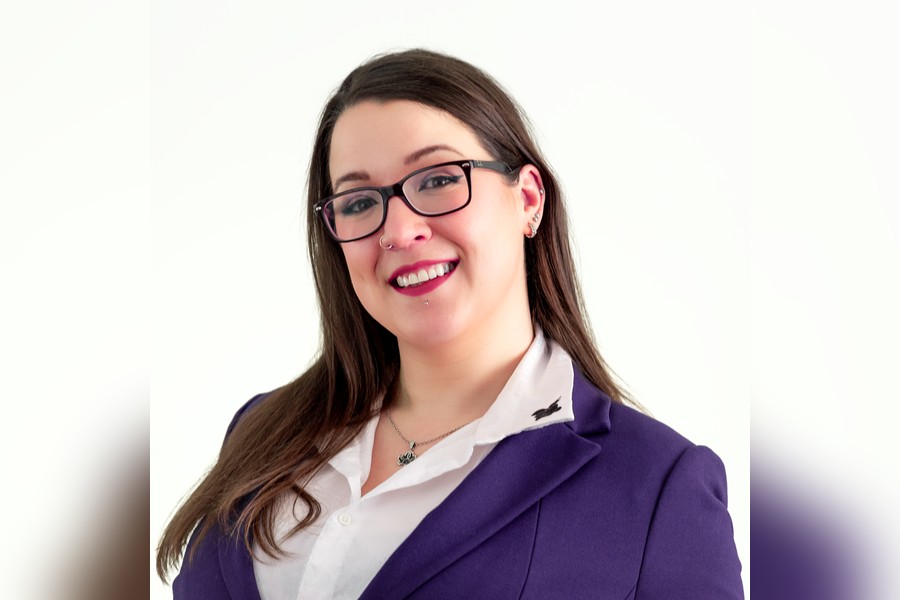
Guest Speaker
Lauren Hedges
Lauren Hedges is a project manager, consultant, and community leader focused on making technology education more accessible and community-driven. Her background spans technology, arts, media, and community development, and she’s known for bridging technical and non-technical communities. As Managing Director of Hackforge, Lauren works to create opportunities for people to learn, connect, and explore technology in ways that strengthen the wider community. She also loves a good spreadsheet—especially one that turns a complicated problem into something people can actually understand.
Outside of tech, Lauren has received award nominations for her work as a producer and set manager on music videos, and her photography has been featured in publications across North America. She also runs Dogs of DWFM, an Instagram project celebrating the dogs and community of the Downtown Windsor Farmers’ Market.