
Season 02 | Episode 08: Invisible Disabilities
In this episode: David and Sandi chat with Dr. Yvette Pegues, an accessibility incident prevention specialist, to explore invisible disabilities and why they are so often misunderstood in schools and workplaces. They discuss how organizations can shift from reacting to accessibility complaints to preventing them in the first place and what it looks like to build truly inclusive environments.
Transcript
David: Hello and welcome to Practical Accessibility Insights. I’m David Best, and with me is my co-host Sandi Gauder. Hey Sandi, how are things today with you?
Sandi: Things are well. Thank you. And how about you?
David: Yeah, today is good. So in this episode, we are turning our attention to invisible disabilities. And it would seem to me that invisible disabilities are probably the most difficult for teachers and employers to deal with because it’s not always understood.
And I guess trying to understand bad behavior from a disability condition would be challenging for some people. So why don’t we get started and you go ahead and introduce our guest for today.
Sandi: I would be happy to. So on today’s podcast we have Yvette Pegues who specializes in accessibility incident preventions, a term I’ve never heard before, but I think quite interesting.
She advises leaders in regulated environments to help them prevent crises before they happen, which is a really great thing. So I’m happy to welcome Yvette to the podcast. Hi Yvette.
Yvette: Hi. I am so happy to be here. Thank you for having me.
Sandi: You’re most welcome. Thanks for joining us. So before we get started with all our questions, maybe you could tell our listeners a bit more about yourself, your background, a bit more about what you do.
Yvette: So my name is Dr. Yvette Pegues. I do help with incident prevention, but before that I was a networking and system engineer for IBM, traveling the world, creating cloud experiences and opportunities for large companies. Even more important than that, I’m a mom and I’m a wife, and I live here in Atlanta, Georgia.
Sandi: As David mentioned, we were wanting to focus this podcast around invisible disabilities, and it’s such a broad expanse of disabilities. It covers all sorts of things. Perhaps you can give us an explanation of what invisible disabilities are so we can have a better understanding or a better foundation for this conversation.
Yvette: It wasn’t until I became disabled did I understand that invisible disabilities are actual real disabilities that people cannot see right away, but they can still see how it affects someone in the way that they learn, in their communities, how they communicate and how they navigate their daily lives.
In fact, when you look at the spectrum of invisible disabilities, it makes up for 85% of the 61 million Americans with disabilities today.
Sandi: That is a huge number. So how does somebody accept or appreciate or understand that they actually have an invisible disability? You know, how does it all come about? Because if the person with a disability doesn’t understand what’s going on with them, it would become difficult for an employer to be able to support that person.
Yvette: Well, when you think about invisible disabilities, you are thinking about ADHD, dyslexia, autism, chronic illness, mental health, and these are just the ones that I’m talking about today because they’re so much more common along with maybe hearing loss and like myself with a brain injury. Being a wheelchair user, it’s not likely that someone’s going to point me to the stairs. But what they don’t recognize is that I also live with chronic pain and I live with an invisible disability called IDD as Intellectual and Developmental Disabilities.
So when they can’t see the disability, they often misjudge the person at work or at school, and it could look like someone being, you know, labeled difficult or unmotivated when they’re actually just navigating barriers that the environment has not addressed.
And you know, there’s a shame factor when it comes to invisible disabilities. So even people who have been diagnosed, it does need to be diagnosed, will not mention that they have an invisible disability because of the shame and the judgment that comes alongside of it.
Sandi: So then how does someone who meets a person with an invisible disability, they don’t know that they have an invisible disability, what’s the best way to interact with somebody if you don’t know? Because as you said, if somebody’s deaf, you can probably infer that, if somebody’s blind, you can probably infer, that if somebody’s in a mobility device, you can kind of make some guesses around it. And if you don’t even know if a person has a disability, how are you supposed to interact with that individual?
Yvette: So ironically, the organization that I started after becoming disabled, suffering a brain and spinal cord injury is called Your Invisible Disability Group because it is such a difficult space for people to live in and exactly why I do the work that I do to offer services that I offer.
What I want your listeners to know is this. The issue is not always the disability itself. I wanna say that again. The issue is not often the disability itself. Often the issue is the environment. And the built system that is set up and created only to work for the type of brain, the type of body, and the type of communication style and creating unnecessary barriers.
So I would always ask, is there anything I need to know about you to continue to help you to succeed? Whether that be in the workplace, whether that be in school. And that, in my opinion and experience gives the person with an invisible disability room to be seen, heard, and supported.
It’s not something legally that we can ask, but when we’re talking about the school, K through 12 allows you IEPs. College environment allows you the office, Office of Disability Services. Your workplace allows you limited access to resources and accommodations. But in each one of those situations, the person with the invisible disability has to ask and be vulnerable and be willing to talk about not their disability, they’re needs.
Sandi: Yes, that’s exactly what it comes down to, right? It’s like, what kind of environment do I need to succeed? So do we inherently, as a society, create environments that are not supportive for people with invisible disabilities? What kind of things do we need to be thinking about?
Yvette: Well, great question.
Once again, these unseen disabilities, barriers and injuries can always present themselves differently. You know, I like to say once you’ve seen one person with a disability, you’ve seen one person with a disability. And so how it affects that individual depends on the environment. It depends on how it affects that person, and it depends on where there are, where they actually are in their disability journey.
If we look back, the Americans with Disabilities Act was signed and approved in July of 1990. So we’re over 30 years into an actual law and an act that helps to make our environment more accessible, and yet we’re still having this conversation. One reason I think is because it’s not really enforceable.
Another reason is because of all the shame and guilt. And you know, a third reason I think is because shifting and changing environments are difficult, but shifting and changing minds and hearts are even worse because you have of course, those architectural barriers, but you also have attitudinal in barriers.
And changing and shifting has to do with the different disability models that most people are used to. And very briefly, if I may, there’s the charity model back in the sixties where you had the telethons by Jerry Lewis who would raise money for people with disabilities who would otherwise not leave the house.
The next major model is the medical model where now science and health was the only way that people with disabilities could survive. And then in the nineties you had this social model where people with disabilities are willing to climb the steps of the Capitol building to say that we are here, we’re alive, and we deserve to be seen and heard.
And I think we’re moving more into an independent model where people like myself with both physical and invisible disabilities are participating in 20 plus adaptive sports. Everything from water skiing, to snow skiing, to scuba diving, and you know, I’m, I, I just learned how to box from my wheelchair and you know, pickleball’s next.
So how do we, you know, involve ourselves in this community? And I think it has to start with us because when you think of all these trends about how the medical model and charity model and social model shifted everyone’s mindset. It took us, it took the people with the disabilities to understand that we do the same things differently and we should ask for what we need and stand on the laws that were written to support us.
Sandi: We have a similar in Ontario where David and I are based. Our legislation came in 2005, but it’s very similar. It’s a very similar experience. We have legislation, but it’s not been enforced. So do you see the change? Hmm, not so much.
David: Yeah. Yvette, that’s a good segue into the question I have is because one of my experiences and working in the corporate world for many years is dealing with unrealized disabilities. And as someone with a vision loss, I’ve had to deal with managers and project leaders in trying to get them to understand the needs that I had. In many cases, you know, we butted heads and there was a lot of friction because I really believed that these people that I had to deal with were either very arrogant or they simply had an unrealized disability.
Either it was undiagnosed or they simply did not want to admit it. And you know, when someone has maybe ADHD or autism, their behavior is not exactly what I would expect when I’m trying to get answers or support from a manager. So the question I have is as a person with a disability in the employment that has to deal with upper level management and you think that there is friction there, what’s the best way to deal with that?
Yvette: First of all, thank you for disclosing. It’s not something that happens commonly in the workplace, especially if it’s progressive. So for example, I was born with a cognitive disability at birth. My brain issue itself was a birth defect, but it didn’t present itself until deep into my adulthood.
So imagine me in the workplace with a declining ability to do my job under the expressed pressure of whatever happens in the workplace to now trust my manager enough to be able to disclose. Because what happens in the workplace is there is no responsibility to your manager unless you disclose. And then once you disclose, who needs to know? And does that disclosure assist the work that you do?
So for example, if I never needed to climb stairs, I don’t have to tell my manager that I’m in a wheelchair. Just a joke, ’cause it’s obvious. But, in the case where you may have an invisible disability that does not affect your workplace, or you have not received any feedback about it affecting your workplace, you are really not required to disclose, and I would say building the trust with your manager, speaking with HR, making sure that management and other people in the workplace are discussing disability.
And that’s where I come in. Seeing me in the workplace in a wheelchair with your CEO or your C-level manager changes the whole culture.
David: I often try to get management to understand the difference between accommodating and integrating, and I’m just wondering, how would you recommend that management deal with merit?
Because quite often employees get their nose outta joint because I’m getting special accommodations for something and they feel I’m being treated special. How do you evaluate merit?
Yvette: I love that. Well, I would say there’s a few ways that I’ve been able to have this conversation. I think diversity is an incredible opportunity for any organization, and diversity isn’t just in the shade of our skin. It’s what we bring into the organization.
So you bring to the organization with whatever way you live your life, a secret weapon. The disability is a 6 trillion, that’s 6 trillion with a T dollar industry here in the United States. So if I can bring in someone into my organization that can see my client and my product and service in a way that my, my customers need to see it, then that’s how they would elevate someone in your position to help create products and services as opposed to as just an accommodation and a cost to the company.
Another way would be absolutely teaching your manager and your coworkers, what it literally looks like to live in your shoes, because this grows us in our organization as human beings. This is an organization that cannot avoid the people group, which is the largest people group in the country of people with disabilities. So the fact that you’re getting assets or access to items to help you do your job better, takes the pressure off of your coworkers.
David: So you’re saying that training and career growth, should be evaluated on the individual skills and procurement of support comes second.
Yvette: I don’t even believe procurement of support should come in at all.
Like bring me a chair so I could sit at a table longer. You know, that’s pretty much what you’re asking. If this is what you need to do your job best, it shouldn’t come across as an aside or an extra. It should come across as any other accommodation you need to do your job well, whatever that looks like. And it’s not exclusive to you because you have a disability. It’s exclusive because you asked and you happen to have a disability.
Because I can ask for things that have nothing to do with my disability, but will help me do my job better. And to be able to look at it from that perspective and use that lens and not necessarily use it to measure your success has been the best experience that I’ve had in working with corporate major national and international organizations.
Then I can see where now the judgment is based on you getting something special that is not even a lens. And that’s why we have to cultivate the culture so that no one sees it that way. Not just your managers, but also your coworkers and anyone coming in new, especially when you’re looking at the generation that is being employed now.
Five different generations in the workplace at once. We want to see how much a company cares. So if I care to work for that company, that I know that what they do and who they are matters. And so I’d rather get paid less and work for a company that cares about its employees in the environment than get paid more to ignore inclusion.
Sandi: So incident prevention is a big part of what you do. So maybe you can explain to us what that really means and how you go about doing that.
Yvette: Yes, I’d be happy to, because incident prevention is not so far from talking about invisible disability, right? It means basically finding accessibility failures before they become harmful or complaints or reputational damage.
So when you think about that in the workplace, knowing that you have an employee who may feel slighted because there were accessibility failures that they may have brought to your attention that you ignored, and now that employee is going public. That’s the last thing you need to be publicly seen as a company that’s not in inclusive.
So the incident prevention that I do is focused on accessibility through travel, specifically airports and airlines. Imagine if you will, traveling now with a disability, but any form of transportation becomes difficult for anyone. Additional barriers of disability comes into play. It becomes a barrier, and back to where we talked about not being able to access the world, easily
Sandi: Travel is a big, big, big one. Here in Canada, we often hear about incidents on the airlines here where somebody whose mobility device has been just destroyed because it wasn’t taken care of in the luggage planes, or not being able to get on the plane or even buses and accessing buses in a timely fashion.
We hear about this kind of stuff all the time.
David: I think what Yvette said earlier that our disability really is the environment, and if the environment is not designed for people with certain attributes, then they have a disability. I often try to get people to understand that there’s a difference between designing for wants and designing for needs.
And I work with young entrepreneurs and I often try and get them to think about real life experiences. If you are trying to start up a business and you wanna develop a product or service, you can create something really cool. But going out to find a problem for that solution can be a challenge. So if you start with the problem, you go and talk to people who have challenges in the real life experiences and then develop the innovation, I think we get a better environment that’s designed for everybody.
Yvette: 100%. And I love to get on stage when I speak in my state-of-the-art wheelchair that climbs stairs and uh, it goes into four-wheel drive beaches and, and, and all that fun stuff. And I like to be able to say, do you have a smartphone? Has anyone in the room ever used a typewriter? Do you use, you know, voice on your phone, like voice to text? And like, do you text? And do you have a lever, uh, in any one of the doors at your home instead of a knob?
Like I go through all the things that were created differently because of someone with a disability. If you have a stroller or a bike that you use at a curb cut to get across the street, you’re welcome. You are so welcome because those things that are taken for granted in your world was created because someone in the disability world could not access that item.
And so now it becomes more, uh, less of a convenience, right, and it becomes more innovation. And I feel like if you create at the point of innovation to include everyone, and that’s where we grow and add value to the workplace, then we are helping everyone. I just think it’s incredible to understand the history of disability.
Incident prevention, you know, uh, that I talk about and the way that I describe my work, it’s kind of what it is, right? Preventing accessibility failures, because my focus is on accessibility prevention and we did talk about how, you know, incidents can be the drop in the bucket that loses the trust for the entire company.
I tell my kids all the time, I said, you earn trust in drops and you lose them in buckets. And that’s one thing in a family, but something totally different, you know, for an organization. And usually, and unfortunately, most organizations wait until someone complains or a customer is embarrassed or an employee is left out or a student even is left unsupported or a story becomes public. But by then the organization is already reacting and the damage has already happened.
And this is a systematic problem. It’s not just fixing one thing. It’s making sure that in the process of creating access, creating opportunities, creating a product or a service, that every single person in the process of making this happen is held accountable. So it is definitely accountability. It’s definitely systematic.
And when we talk specifically about accessibility governance from that lens, I can see how small gaps become major failures in like a high visibility environment. So if nobody owns accessibility, clearly, if staff are uncertain on what to do, if systems become disconnected or if a problem happens, then small barriers become major operational failures.
And when you’re dealing with a very high risk people group, then there’s also very high outcomes and safety issues that come out of it. It’s not just someone who’s angry. It could be someone whose life is put in danger.
Sandi: So when organizations approach you to help them with this incident prevention, how are they usually framing the request or the problem? Like what is driving them to you in the first place?
Is it because something happened and they wanna make sure it doesn’t happen again? Or are they actually thinking about, well, we’ve read these stories, we don’t wanna be that company. Like how do they get to you? What is their motivator?
Yvette: Yes. Usually it’s after something goes wrong. But because I have really niched into a specific part of the industry that I’m very familiar with, because I travel 40% for work, a lot of times is based on something that I deal with that they have not had any understanding of, ’cause it doesn’t usually get to your C level, you know, or to your GC or general attorneys or anybody kind of in customer service. It, it hardly ever gets to that point.
‘Cause people who travel with disabilities just stopped traveling. I think there was 2 million people since COVID with disabilities who stopped traveling because of exactly what you said. It’s just too much work and you know, it, it’s hurting them physically.
But what organizations usually do is reach out to me when they hear about what I do because they realize that there’s something broken or they’re getting way too many complaints.
I am on the ADA committee for the largest airport in the country, and they found me because they had all these FAA violations and I have since chaired it, and they’ve since won awards for the work that they do.
So we just start with basically mapping accessibility. Like what are you getting the complaints about? And what does that look like from curb to cabin, right? What’s likely to break down? Who owns this process? What happens when someone needs support? Are your teams trained? You know, are communication pathways clear, which they usually aren’t, and is there, you know, accountability?
So usually they may just bring me in to have a conversation, and through that conversation they realize that there are gaps and black holes that some of these problems go into and how to avoid it going forward. So the first way is yes, once an incident happens. Secondly, it’s once they get complaints or here’s another way that’s exciting to me is when someone new comes in and they start asking questions that no one has asked in a very long time.
Sandi: I love that you’re using that phrase because it is so much, it’s a process and it’s like, it’s like a decision tree. What do I do if this happens? Do I go left or right? Is it a yes or a no? It becomes habit, and once it’s a habit, it’s kind of hard to undo the habit.
So it’s almost like creating new habits or breaking old bad habits when you put a process in place. It’s very much a process oriented thing, and I never really thought about it that way before until you said that. So thank you for that.
Yvette: It is a process. It is a system, and if we are hiring contractors to help us to do our work better, whoever we bring into our organization. If you’re thinking of an airline, I have one ticket with one brand on it, right, but there’s 30 different contractors that impact how I get from one city, state, or country to another.
And so each level of that process is part of a system that doesn’t get checked until something goes wrong. But to get in front of it and to hold your contractors accountable for the work that you agreed for them to do, and be very abreast and aware of any changes that happens in the way that they deliver those services, helps you to run your airline or your airport, or your school or your workplace, so much better.
Sandi: From your perspective, how does AI fit into all of this? Is it gonna help us make things better? Is it gonna help thing make things worse? How can we use it? What’s a good way to be thinking about using AI to help with processes, remove barriers, all those kinds of things?
Yvette: I think we should all be AI aware. I’ve written a book about AI ethics from the lens of a disabled engineer to help protect individuals with disabilities who will inevitably be using AI connected to or aligned with AI in what they do. When you think about the future of accessibility, and you know how AI can help with captions and transcripts, summaries, image description, navigation.
And other tools that, you know, reduce friction and improve access. We need to make sure that individuals with disabilities feel safe, are safe, and that we are involved at the onset. Much like you were saying, David, not to come into the work after it’s done to fix it, but AI is here. It’s now. Involve us as your stakeholders here and now.
But you know, I do encourage people, especially small to medium sized businesses, not to let the conversation get too futuristic, too fast.
Sandi: You touched on the concept of safety around AI. So can you just expand on that a little bit? What does that really mean? And what should people be paying attention to?
Yvette: If you think about people with disabilities, I know Google has done a really good job in creating access to our lights, our doors, connecting a lot of resources and services to our phones as far as people with disabilities. And Alexa, and so many other companies are putting these equipment into homes where people may or may not understand the depth of what’s happening.
So if these products are always listening, what are you saying? How do you turn them off? How do you turn them on? How do you know if what you’re saying is being protected? How do you know if going online to some of these banking systems that are now using AI, protecting your information?
And a lot of times, and unfortunately the elderly and people specifically with disabilities are using a lot of these tools and have no idea how they’re connected to the rest of the world. But you know, safety for people with disabilities is also making sure technology doesn’t create new barriers, right? Or deepen some of the old biases.
So when you talk about someone being technology averse, there’s always this risk in the name of, you know, innovation, right? But it still needs to protect dignity, work with assistive technology like the ones that I mentioned, and then be tested by the people who are most likely to be harmed by it.
David: Yvette, I wanna thank you so much for joining us on our podcast and revealing to us what invisible disabilities are and how we should be considering solutions for working with people that have invisible disabilities. Do you have any contact information or resources you would like to leave with our listeners?
Yvette: I just wanna close out of course, by thanking you and, and sharing that, you know, accessibility is not just about accommodation after the fact. It’s whether or not our systems are ready for people in real life. Whether we remove the barriers early or we do more that include people, those who feel invisible, to this, to, to be perfectly honest, I, I’ve, I’ve had those moments and I still do.
But we need to include all people to prevent harm and to build trust and create environments where everyone has a fair chance to participate from the start. And I am so happy to continue to share that through my website, YourInvisibleDisability.com and also YvettePegues.com.
Sandi: Thank you. What practical tip can you leave for our listeners that will either help them understand invisible disabilities or help them help somebody with an invisible disability?
Yvette: Well, I think a practical tip would be to continue listening to your podcast because you have such incredible guests, right?
And so, as we think about the business, the workplace, and aviation, don’t wait for a complaint. You know, pick one barrier and remove it this week. Don’t wait. Include people in your organization and your workplace. Look at one part of your organization and just ask a simple question: who might be excluded?
Accessibility truly often starts with attention, not perfection. And that is where we get stuck, right? What do they say? Progress, not perfection. And that’s how culture changes, right? One decision, one system, and one less barrier at a time.
Sandi: Excellent advice because it can be overwhelming. So break it down. And thank you for taking some time to speak with David and I today.
It has been a real pleasure and uh, wish you a good rest of your day.
Yvette: Of course. Thank you for having me.
David: The views, thoughts and opinions expressed on this podcast.
Are the speakers own and do not necessarily represent those of the podcast team and partners. This podcast is for information and learning purposes only. The Practical Accessibility Insights podcast is hosted by CMS Web Solutions. The intent of this podcast is to raise awareness for practical advice and strategies for making digital and physical environments more accessible to everyone.
Thank you for joining us in this time of discovery and sharing for a more inclusive society. If you have questions or comments, you can email us at info, I N F O, at david dot best or Sandi, S A N D I, at CMS Web Solutions dot com. For more information and resources, go to www.CMSWebSolutions.com or www.BestAccessibility.consulting.
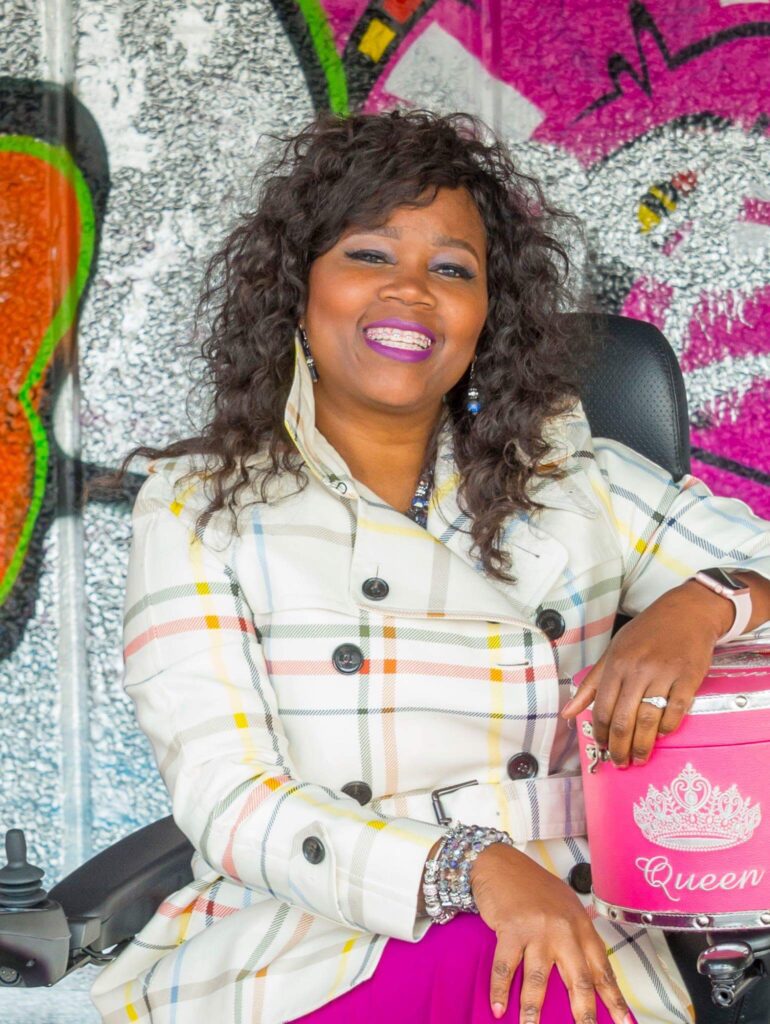
Guest Speaker
Dr. Yvette Pegues
Dr. Yvette Pegues is co-founder, CEO and Chief Prevention Officer of Your Invisible Disability Group. With lived-experience and investigative expertise, she helps leaders in regulated, high-visibility environments prevent accessibility failures before they become executive crises.
As a CPO (Chief Prevention Officer), her work focuses on accessibility as operational and governance risk, not training or compliance. She advises COOs (Chief Operating Officers), General Counsel, and Operations leaders on where accessibility failures are most likely to occur, who owns them, and how to reduce exposure before issues escalate into incidents, lawsuits, or reputational damage.
For our listeners, Yvette is sharing a free resource: See It. Stop It. Scale It.™ A Free Practical Guide to Invisible Disabilities, Incident Prevention, and AI Accessibility.