
Season 01 | Episode 12: Accessibility from a Student’s View
In this episode: David and Sandi talk with Elizabeth Doherty and Stephanie Evans, board members of NEADS (National Educational Association for Disabled Students), about their experience in post-secondary education. They share insights and tips on navigating post-secondary education as a learner with disabilities.
Transcript
David: Welcome to Practical Accessibility Insights. I’m David Best, your host, and with me is my co-host, Sandi Gauder. Hi Sandi.
Sandi: Hi David. How are you today?
David: I’m doing good, thank you. So this is our third episode in the four-part series on education. We looked at elementary and high school education. In this episode, we’re gonna look at post-secondary education and see what’s happening with regard to barriers and expectations for students in the post-secondary system.
So, Sandi, please go ahead and introduce our guests for today.
Sandi: I would be happy to. Thank you, David. So we’re doing something a little bit different here on the podcast today, and we’re interviewing two people for the show. First of all, we have Elizabeth Doherty and Stephanie Evans. So welcome Elizabeth and Stephanie.
Elizabeth: Thank you.
Stephanie: Hi everyone.
Sandi: So I’m gonna ask you both to give us a brief introduction before we start having our conversation. So Stephanie, why don’t you start it off for us. Just tell us a little bit about yourself, something that the audience might want to know.
Stephanie: Yep. So I’m Stephanie Evans. I’m from Newfoundland and Labrador St. John’s. I am a chairperson for NEADS, the National Educational Association for Disabled Students, and I just graduated with a social work degree.
Sandi: Great. Thank you. And Elizabeth.
Elizabeth: Hi everybody, my name is Elizabeth Doherty. I am joining today from Fredericton New Brunswick. I am vice chair with Stephanie with NEADS, and I’m also the New Brunswick Director as well. And my post-secondary journey has been quite long. I graduated from St. Thomas University with, it would be a, a second degree and, and the most recent one was in also in social work.
Sandi: Is that a requirement to be part of NEADS, is to be a social work student or is that just a coincidence?
Elizabeth: Being a social worker or a social work student is, is not a requirement of being on the board of NEADS.
Sandi: Stephanie can just give our audience an idea of what NEADS is all about, what its history and, and what it serves to do.
Stephanie: So NEADS helps all people with all different type of disabilities from all over Canada in university and colleges. So they help in accommodations, they help with research, they help in support, they help in employment afterwards or before you graduate.
Elizabeth: To give a bit of context to the history of NEADS. So NEADS was officially founded out of Carleton University in 1986 by Frank Smith. It was, as Stephanie had said, created to represent post-secondary students with disabilities at a national level. Throughout the nineties, there was research conducted on accessibility and support services within Canadian post-secondary institutions.
They also, as an organization started to develop partnerships with disability service providers, colleges and universities and, and those partnerships, many of them continue today and we’re always looking to establish more and new partnerships nationally as well. Throughout the two thousands, there was more comprehensive online resources for students with disabilities that became available mid two thousands I guess.
The advocacy efforts changed to or expanded to include mental health, learning disabilities and invisible disabilities. You know, and then there’s been various advances like strengthening the role in national policy discussions on disability and education, NEADS was consulted on in consultations, I guess, with the Accessible Canada Act.
We offer many scholarships and funding opportunities for students, which is always expanding. So I think that’s important to mention too. And then also offered financial supports to students with disabilities throughout COVID. And you know, we continue advocacy on systemic barriers in education and also employment.
We’ve existed, you know, for almost 30 or 40 years I guess it would be, be now. I think I can say for both Stephanie and I, we’re really proud to be part of such a, a groundbreaking and important organization and nonprofit.
David: I’m curious how many members are in the NEADS organization and what is the makeup?
Is it just students or is there professional as well?
Elizabeth: I guess first of all, it’s strictly students, although that would be comprehensive of like colleges and universities, but also we support students throughout universities. That would be at the undergraduate, Masters and PhD levels. I guess the professional realm would be more the partnerships with the service providers.
The board itself is a governing board and we serve as the members. We don’t have like a paid membership.
Sandi: So if I were a student with a disability, I don’t need to join NEADS. Is that correct?
Elizabeth: That’s right. We would never like deny anybody’s support or resources,
David: So NEADS services the needs of all students with disabilities. To get the benefits from the NEADS organization, you don’t have to actually become a member.
Stephanie: Yep. That’s exactly right.
Elizabeth: Our board of directors, there’s the executive, and then there’s a provincial director in most provinces. We are currently recruiting for Prince Edward Island, Quebec, and Northwest Territories. But essentially, if somebody say, reached out, for example, and depending on what province they identified that they live in, communication would be established with the provincial director. But it really depends on what supports and services they’re looking for ’cause they vary really.
Sandi: You mentioned when you were talking about NEADS that it looks at systemic barriers in post-secondary education.
Are there some common ones, are there ones that have been identified and just continue to be identified and don’t go away? Or are you seeing that once an issue is identified, solutions come into play that get rid of that barrier for students? Stephanie, do you wanna try that one?
Stephanie: Things that I see is like, people like reach out to me for financial assistance, seeing if there’s any scholarships around, because a lot of students are having a hard time being able to afford university and then having a disability on top of that as well is hard. So we try to help with that.
Also, accommodations. Some universities you need to have a letter from your doctor saying that you need these accommodations, but a lot of students now don’t have a family doctor, so that’s a struggle.
And just having profs like completely understand accommodation, like if we had more understanding and have like profs actually listen to the students and see where they’re coming from, that would make a big difference.
Sandi: That’s must be incredibly frustrating.
Elizabeth: Yes.
Stephanie: And also fiscal barriers. That’s a big issue too.
There’s been universities and colleges where elevators are broken, so students can’t even go to their class that they paid for, and so they’re missing valuable student time like with assignments and tests, and it’s very frustrating.
Sandi: So when you think back to your time in university, what kind of barriers did you run into and, and what kind of supports were available to help you complete your schooling, your education, make sure you could get the research done that you needed to do?
What kind of barriers did you encounter and what kind of resources were available for you?
Stephanie: So before I got into university, my profs and my teachers were like, you’re never gonna get to university. Don’t even try. So then when I went to university, it was a bit of a struggle. It took me three years to get into the social work program, but that’s what I wanted. I was very determined.
For my supports, I didn’t really have much support, really. Like having my classrooms were very small and I have a physical disability and I use a walker, so trying to get around my classroom was a struggle. I did have accommodation with extra test time, which I find helpful ’cause I have test anxiety and so being able to be put in a quiet room and have that time to actually do my best, which is great.
And also like my I, this is my prof, like from social work. Her name’s Amy and she’s absolutely amazing and she helped me get through the social work program. She said, I belong there. And I would be a great social worker.
So having that moral support really made a difference in my journey. I don’t know what I’d do without her, to be honest.
David: I think that’s so important. You know, I think back to my education and if it hadn’t been for one or two students or teachers that really took an interest and encouraged me, I think it would’ve been a lot more difficult.
Sandi: How about you, Elizabeth? What was your journey like?
Elizabeth: When I think of like my time in university, I see it as like in parts. I’ve always been at the same institution. I’ve always been a, a student of St. Thomas University and I graduated from high school in 2001. I worked for a year after high school, so I enrolled in the fall of, uh, it would’ve been September, 2002.
At that time, the institution itself looked very different, and to be honest, I think I would say that, you know, persons with disabilities, we’ve always existed, but in terms of the supports and services that were available, generally speaking, at that time, looked very different.
Many of my disabilities, for example, muscular dystrophy, while I would’ve been born with that condition, I was adopted as a baby. So I actually didn’t get that diagnoses until I was in my thirties. So in terms of the accommodations I needed for the first part of my time in university, it was pretty standardized in terms of the supports and accommodations, I required when I came back to university.
So my first stint in university was approximately 2002 to 2009, on and off with my first degree with my Bachelor of Arts. Then I really started to experience a decline in my health, and my son was born in 2010, so I took a number of years off, and I returned in 2018.
When I returned, I was a part-time student. I was a mature student, so that looked very different being in classrooms with generally much younger, much younger students. Really as my time went on in university, I required more supports. So I graduated with my first degree finally in 2022, and I really was only able to attend part-time from 2018 to 2022 in finishing that degree.
And you know, I will say that was frustrating at times because the finish line seemed like it was never gonna come, especially considering when I first started. But as Stephanie said, she was very determined and I think that’s a quality or character trait that many persons with disability possess is tenacity and determination, and we’re resourceful.
When I returned to university in 2022, I was accepted into the social work program. For the first time in many years, I had to attend full time, and I would identify that is somewhat of a barrier because it was sort of assumed that you could only attend, be a student of the social work program, a professional program as a full-time student.
So I ruffled some feathers.
David: Elizabeth, and then Stephanie can reply as well. I’m curious to what the attitude of other students were like when you started university in your freshman years. Were classmates supportive or did they ignore you? Or did you find very much of a difference between high school and university?
Elizabeth: When I was in high school, I really, at that time I had learning disabilities more so, but many of my diagnoses like autism and muscular dystrophy and, and some other things didn’t come into later in life. So I sort of, for lack of a better word, flew out under the radar in high school and, and through public education and somewhat the first part of my degree.
When I entered social work, I would say that it really was dependent. I was put in positions where I really had to advocate for myself and educate both professors and students. I would largely say I was involved with two cohorts, both of which were largely accepting. And I would argue that ideally you would hope that in within a social work program, uh, given the work that that we do. The institution itself had more barriers than the social work program, I would say.
David: So Stephanie, how did you find the reaction of students compared from high school to university?
Stephanie: So when I was in high school and even like elementary and junior high, I was extremely bullied, physically, mentally, all of that. It was very traumatic, but I knew that I wanted a better life for myself, and I knew that within me that I was capable of so many things.
So when I got into university, things changed. People started to like respect me more and they want, like, they were like older, so they want to un understand. So I find like when you’re younger, you just want to fit in and if you don’t look a certain way or act a certain way, then you are gonna be shut out, which that’s how I felt.
So when I got to university, people were very accepting and wanted to help. And having that community really helped my university experience. I joined clubs, I got on board of directors. I went to parties and interacted with so many people. So my university experience was a lot better than early years for sure.
Sandi: For both of you, if you can think about this question.
If you had to give one piece of advice to a student with a disability who is going to be going to post-secondary for the first time this fall, what’s the one piece of advice you would give that student, Stephanie?
Stephanie: Well, so. Be comfortable with being uncomfortable. Be able to take risks and be yourself.
Like if you need support, reach out, ’cause there’s people that’s gonna have your back.
Sandi: That’s good advice for anybody. That’s great advice. Elizabeth, what would your piece of advice be?
Elizabeth: I would echo what Stephanie said, but if I were to say something different, I would say, you know, everybody’s post-secondary journey looks different, Whether you have a disability or not. And you know not to give up. Sometimes, I think as society we assume people can read our minds and to keep that in mind with our professors. Like Stephanie said, don’t be afraid to reach out, but maybe try not to assume that the professors will automatically know what accommodations you may need.
And, in my experience, the more communicative you were with your professors, the more understanding they would be. Because in many cases, there’s not a lot of education or training for the professors on accommodations, unfortunately. More often than not, I would say like your professors ideally will be your allies and just to keep that in mind, but also like whether it takes you four years or, or 20 years, keep on going.
You know, if it means you have to take some time off, that’s okay. School’s always gonna be there, you know, that was a big lesson for me to learn ’cause going into university in 2002, I thought I’d be done in four years and all of those things. You know, 2025, I finally got that second degree.
But I wouldn’t change a thing really. I mean, maybe depending on the day, but, but really, you know, there was things that I learned outside of the classroom on campus that were just as impactful as the lessons inside the classroom.
David: Stephanie, thinking of the future of education, what would you like to see the system do? Is there changes you would recommend or advise our accessibility standards committees to think about? We know that the education system is radically changing from the classroom to online learning. Is that a benefit or did you see changes differently?
Stephanie: Mm-hmm. So this is a great question. So for my job, I am doing a universal design in learning practice, community of practice, which means that students will no longer have to require accommodations ’cause they’ll all be already be in the classrooms. So in the community of practice, we’re gonna have community, we’re gonna have government, we’re gonna have researchers, we’re gonna have profs, we’re gonna have students all in this community of practice talk about concerns, things that they want in their classrooms or community.
Have workshops, trainings, so everyone come together because creating a more accessible world, uh, like we want it, but people can get overwhelmed and people don’t know where to start. So having this community of practice will help with that.
And also, we’re not just working with post-secondary. We’re working with pre-K to post-secondary because it’s important to start like children early in knowing what they need, what they want and the supports that are available.
So I feel like if other universities and colleges had the universal design and learning mindset, I think it would make a world of a difference, honestly.
David: Elizabeth, what is your future thoughts of education for students with disabilities?
Elizabeth: I grew up in a household where both of my parents were educators and both of them supported children and youth with exceptionalities.
So, myself when I think back to like even dining room conversations and what supports and services were available to like the children and youth that my parents supported and, and thinking back to then, and, and my parents were fierce advocates for the, the students and youth and families that they supported.
I would say like I learned that from them. I think it’s important looking forward that we recognize and society recognizes that it doesn’t have a time stamp on it. It’s something that should always be forward moving. And I think much to what Stephanie said, it’s important that they include as many stakeholders in the discussions as possible and be sure to highlight the people with lived experience.
I think really we’re the ones, broadly speaking with the experience and the knowledge and versus, you know, perhaps people that are work in these agencies but haven’t lived it. I think it’s important to pay attention to policies and what’s important, and again, that these supports and services start as early as possible because when these are implemented for our population, generally speaking, they also would support everybody.
It would uplift everyone. I would like to say common sense, but I would argue it’s not. And knowing that what works today, in today might not work next year or five years, it may need to be changed. But as long as we’re making forward progress, I think that’s what’s really important.
David: Well, thank you so much, Elizabeth and Stephanie for joining us.
I really appreciate your insights with regard to your experiences and encouragement for students that are thinking about going on to university. Do you have any suggestions as to resources and contacts some of our listeners might reach out to, to get help?
Elizabeth: For myself, I’m gonna plug NEADS here. On a national level, we’re on all of the social media. We have our website, we are on Instagram, Facebook. We’re easily found, I would say.
But also for students that have just graduated and are starting in the fall, I would say NEADS is a great place to start. We can often point people in the right direction, help connect with resources. For those that are, say even in grade 11 going into grade 12, I would encourage you to meet with your guidance counselors within your high schools and start doing your research now.
Our organization would be happy to help anybody, but even locally within your schools, that would also be a a place to start as well.
Stephanie: There’s grants for equipment that you may need. If you need a computer or a computer chair or anything you need to help your education be successful. There’s also other grants that you don’t have to pay back from your student loan, which is great.
NEADS is spelled N-E-A-D-S, National Educational Association for Disabled Students.
Sandi: So we’d like to end each podcast with a practical tip we can leave our audience. So, Stephanie, what’s one practical tip that you could suggest to our audience that would help eliminate barriers, either in education or just in life in general?
Stephanie: I think just be able to have an open mind, be able to adapt, and to be able to listen and have empathy. I think it’s important.
Sandi: Good advice. And Elizabeth, one quick tip.
Elizabeth: I think quick tip would be, if possible, to request accommodations early. So for those students that are starting in the fall, perhaps maybe connecting with the accommodations office at your institution throughout the summer would be a, a good piece of advice because they, they tend to get slammed, uh, once the academic year starts. So just a quick email or something can, can go a long way, you know, sooner the better. But yeah, I guess that would be my, my practical piece of advice for sure.
Sandi: Words of wisdom. Thank you. Thank you both for joining us. Uh, it’s great to have two east coasters on with us, so that’s, that’s been wonderful. Thank you so much.
Elizabeth: Thank you both for the opportunity today.
Stephanie: Thank you so much.
David: The views, thoughts and opinions expressed on this podcast.
Are the speakers own and do not necessarily represent those of the podcast team and partners. This podcast is for information and learning purposes only. The Practical Accessibility Insights podcast is hosted by CMS Web Solutions. The intent of this podcast is to raise awareness for practical advice and strategies for making digital and physical environments more accessible to everyone.
Thank you for joining us in this time of discovery and sharing for a more inclusive society. If you have questions or comments, you can email us at info, I N F O, at david dot best or Sandi, S A N D I, at CMS Web Solutions dot com. For more information and resources, go to www.CMSWebSolutions.com or www.BestAccessibility.consulting.
Guest Speaker
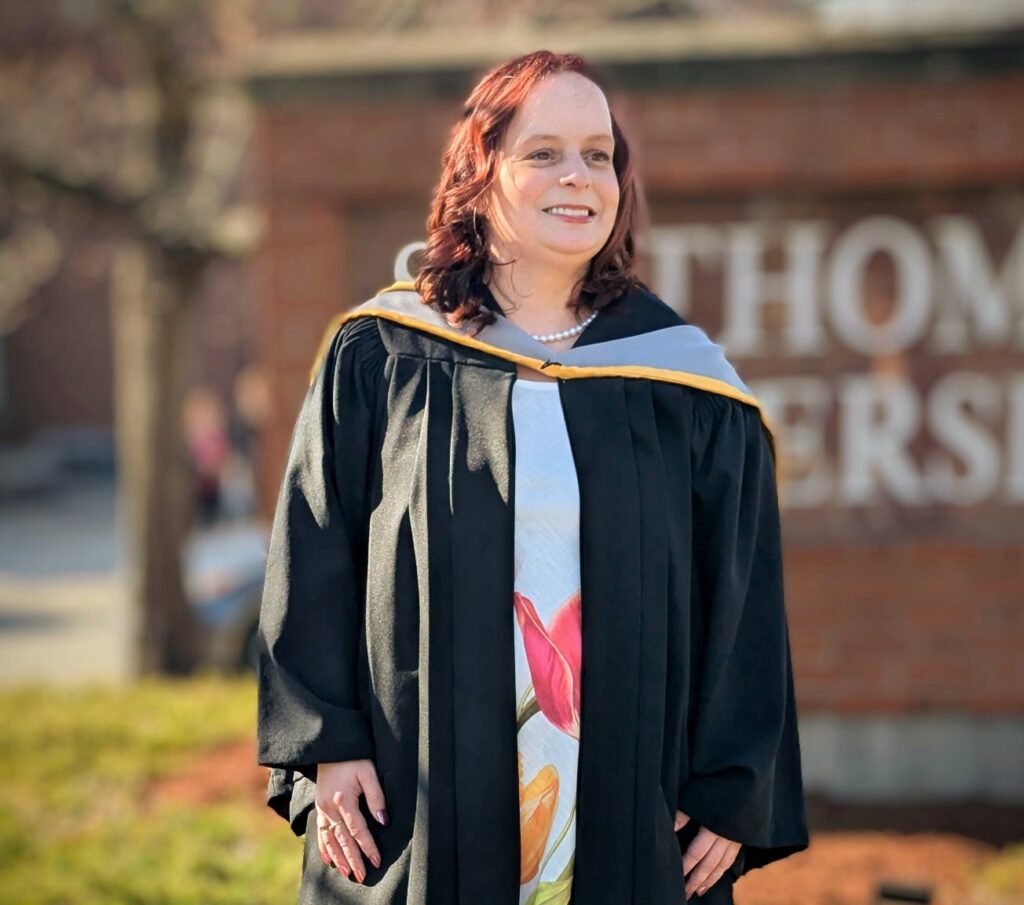
Elizabeth Doherty
Elizabeth (she/her) is a Registered Social Worker based in Fredericton, New Brunswick, with a deep commitment to social justice, research, and policy advocacy. After earning two degrees from St. Thomas University – completing her second in 2025 – she has been actively involved in provincial and national advocacy, including work with the New Brunswick Coalition of Persons with Disabilities and the NBASW.
Living with a rare form of Muscular Dystrophy and other complex health conditions, Elizabeth brings lived experience to her work navigating support systems. She serves as the Vice Chair and New Brunswick Director for NEADS, where she continues to champion change for students with disabilities.
Guest Speaker
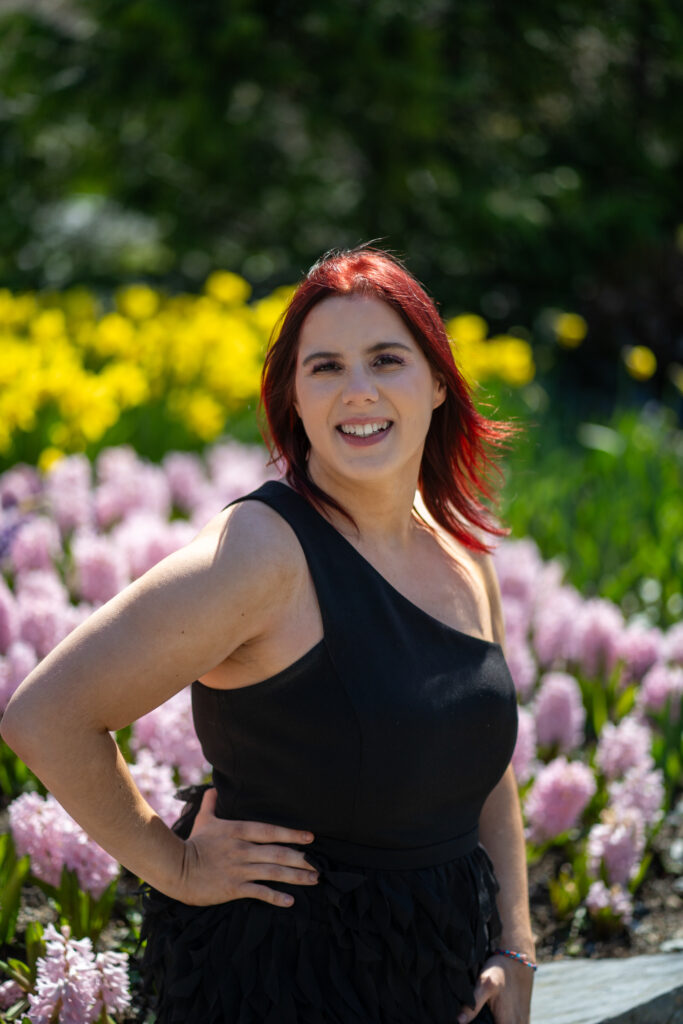
Stephanie Evans
Stephanie Evans is a mental health and disability rights advocate from St. John’s, Newfoundland and Labrador, whose work is rooted in both personal experience and a background in social work. She is the chair and provincial director for NEADS, and has held leadership roles with MUNSU and the Canadian Federation of Students.
A believer in nature’s impact on well-being, Stephanie also serves on the Wavemakers Advisory Board and the Dawn Canada Hummingbird Network. Her advocacy has earned her recognition as St. John’s Volunteer of the Year and a nomination for the 2025 D-30 Disability Impact List.