
Season 03 | Episode 02: Inclusive Hiring for Small Businesses
In this episode: David and Sandi talk with Amy Widdows, CEO of the Ontario Disability Employment Network (ODEN), about inclusive hiring for small businesses. We discuss common myths about hiring people with disabilities, how to make your hiring process more accessible, and simple first steps any employer can take.
Transcript
David: Hello, and welcome to Practical Accessibility Insights. I’m David Best, your host, and with me is my co-host, Sandi Gauder. Hi, Sandi.
Sandi: Hi, David. How are you doing today?
David: I’m doing good, and we’re gonna continue our discussion about small businesses and entrepreneurs trying to establish a foothold, and particularly we’re interested in Ontario organizations, ’cause that’s where we reside.
So Sandi, can you go ahead and introduce our guest for today?
Sandi: So today our guest is Amy Widdows, and she is the CEO of the Ontario Disability Employment Network, also known as ODEN, and Amy has been with ODEN for quite some time, and her work is all about inclusive employment. So Amy, welcome to the show.
Amy: Thank you, Sandi. Thanks for having me on the show, and thank you, David.
Sandi: So before we get into our conversation, why don’t you tell us a bit about yourself and your role at ODEN?
Amy: Sure. As you said, I am the CEO of the Ontario Disability Employment Network, otherwise known as ODEN. ODEN is a province-wide member organization, and really our work is about bringing businesses and employment service providers together to increase employment opportunities for people who have a disability.
So we work on both sides of that equation. We help businesses build their disability awareness and confidence and become more inclusive employers, and we also work with employment service providers to strengthen their capacity and create better connections with businesses that are hiring. So for me, one of the things I’m really passionate about is changing the conversation around disability and employment.
We need to really get beyond looking at disability inclusion as simply something we should be doing because it’s the right thing to do or because legislation’s telling us to do so. It’s simply it’s good business. We all know those stats that 27% of Canadians have a disability. That represents a significant talent pool, but also a significant consumer market.
Globally, people who have a disability represent about 1.3 billion people, and together with their families and networks, that represents enormous economic influence. So when we talk to businesses about disability inclusion, we’re talking about talent, innovation, productivity, customers, and business growth.
That’s the conversation I want more employers to be having.
Sandi: What do you think are the biggest misconceptions small business owners have around hiring people with disabilities?
Amy: I think one of the biggest misconceptions is that it’s going to be complicated or expensive. Sometimes employers believe that hiring someone who has a disability means major workplace changes or expensive accommodations, or they somehow have to become disability experts before they even get started, and truly they don’t.
What I wish more employers knew is that you don’t have to understand every disability You need to understand your employee or the candidates and their needs. You need to create an environment where someone is comfortable telling you what they need to be successful. Small businesses need to be comfortable asking what people need to be successful, all employees, not just people who identify as having a disability.
And I think that’s an important distinction. We have to get away from assumptions about what someone can or cannot do based on a disability or based on our own experiences. So one of the areas that ODEN focuses on through our disability awareness and confidence training is helping employers recognize those assumptions and stereotypes because they can influence decisions throughout the recruitment process, their hiring and onboarding, and the employment career.
Another misconception is that this is primarily a social responsibility conversation. It absolutely has social impact, but there’s also a strong business case. ODEN talks about inclusive hiring in terms of increasing hiring and retention, improving disability awareness and confidence, accessing talent, and ultimately enhancing business performance.
But at ODEN we say, “Don’t hire someone because they have a disability. Hire them because they’re the right person for the job.” Give people the opportunity to compete. Look at their skills, their experience, and their potential rather than making assumptions about what they may not be able to do.
David: I’m interested to know what the demographics is of ODEN with regard to the different types of disabilities, and what is the cultural attitudes, or is there a difference in business attitudes toward people with physical, sensory, or cognitive-type disabilities?
Amy: I wouldn’t wanna put a blanket determination on what employers think, but the demographic we serve in Ontario is pan-disability. So our membership is made up of employment service providers in Ontario, both provincial and national organizations who support all types of disability. So we can lean on our membership for the expertise they offer for all disability types, and can offer businesses those resources.
These employment service providers across the province are skilled at all disability-type supports, and can really navigate any concern or issue that an employer may have.
David: So the largest group, I assume, you work with are people with physical disabilities rather than sensory or cognitive?
Amy: No, absolutely not.
So to provide context, ODEN doesn’t directly work with job seekers. We work with the employment service providers of the province who do work with those job seekers. So the employment service providers of the province who are within our membership work with all disability types. So there’s not one specific demographic that we work with more.
It’s pan-disability, so all disability types.
Sandi: So then you mentioned training. What else or how else does ODEN work with small and mid-size employers? And what does a good first step look like for a business that has no idea how to start hiring people with disabilities?
Amy: I think one of the most important things we do at ODEN is we meet those businesses where they are.
Not every employer has an HR department or an accessibility specialist, particularly when we’re talking about small and medium-sized businesses. So our approach has to be practical. ODEN works with businesses to do a variety of things, to strengthen their inclusion and diversity efforts with a focus on disability, increasing hiring and retention, improve disability awareness and confidence, and connecting those businesses with the local employment service providers who ultimately have the job seekers and the talent.
We also work extensively with those employment service providers in the community because they’re an incredible resource for businesses, and that’s one thing I really want businesses to know is that resource exists in every community, for the most part, in the province. So one of ODEN’s priorities is actually strengthening those connections between employers and service providers so that those employers can access that support around inclusive recruitment, hiring, onboarding, and retention.
So for a business that hasn’t done this before, and I’ve met a lot of those, my advice would be don’t try to do everything all at once. Start by looking at one part of your business. Maybe it’s the hiring process itself.
Pull out the last job posting and ask yourself, “Are all of these qualifications really required? Is there anything in here that might unintentionally screen someone out? Are we focusing on how a task has traditionally been done, or are we focusing on the outcome we actually need from the person doing the job?”
Then look at maybe your interview process and ask the same kinds of questions. The starting point doesn’t have to be complicated.
It’s just start somewhere, learn from it, and keep building.
Sandi: So how do employers become familiar with ODEN in the first place? Is it through these employment service providers that they become aware of it, or do they find you first and then you direct them through to the employment service providers?
What’s the process?
Amy: It works in a variety of ways. We, first and foremost, yes, we have the membership whom we work with, who they then recommend our services to businesses who may require our supports. So we recommend employers reach out to employment service providers for their expertise and services, and they then recommend us for services that perhaps they don’t offer.
But in addition to that, we are connected with the business community across the province and across the country. So we work with organizations like chamber of commerces across the province, across the country. We work with municipalities. We work with provincial and federal ministries to promote our services.
We wanna make sure that we have really flexible offerings to businesses because our ultimate goal is to increase opportunities for people who have a disability at the end of the day. We do also hold memberships for businesses, so we can support businesses in a variety of ways. So we have one-off services, but we also offer them annual memberships because we know that businesses are on their own journey, and it’s not on a particular timeline.
So our corporate memberships offer them an opportunity to work at their own pace throughout a year, and we’re available to them as they need and as they’re progressing through their journey.
David: So does ODEN offer a mentoring program for people with disabilities that you find a job for, they get started in a small business? Is there any kind of mentorship program for them to call on for help?
Amy: Actually, yes. ODEN works with the March of Dimes Canada to operate MentorAbility Canada project in Ontario.
There is a national MentorAbility Canada project that’s operated through CASE, which is the Canadian Association for Supported Employment, and we’ve been operating the MentorAbility hub in Ontario now for, I believe we’re in year six. And this is an opportunity for anyone who identifies as having a disability to connect with a mentor, to spend up to one day to learn about a particular role, a sector, ask the questions that they’re interested in learning, to decide if that’s a particularly interesting career for them.
And they can do as many mentorships as they want. It’s been a very successful program. And the hires that have come out of this program have been really astonishing because what’s happened as a result of these mentorships is that employers are having an opportunity to sit with somebody who has initiative, who’s motivated, who’s really keen to learn about that particular role or sector or industry, and they’re saying, “You know, this is a very potential candidate.”
The opportunity for the employer to have a conversation with this person and learn about them and their interests and their career goals has really become a substantial way for candidates to have both informational interviews, mentor experiences, and learn about potential business opportunities.
Sandi: Many of our listeners are based in Ontario, but a lot of them are not. So is there equivalent organizations across the country do similar work to what ODEN does, or is it an Ontario-specific kind of thing?
Amy: I don’t know if there are organizations who do exactly what ODEN does but there are very good organizations across the country that do this kind of work.
If somebody is in another province, we’d be very happy to reach out to our resources and connect them to any province or territory. We have external stakeholders in all provinces and territories.
David: How long has ODEN been around, and has it gone through any kind of changes over the years?
Amy: Absolutely. So I have been with ODEN now for just over eight years, and we have been operational, I believe we’re in our 13th year.
And yes, like any organization, we have transitioned from service to service. We’ve grown, as the needs have grown, as the needs of our membership has grown, so have we. We’ve developed different initiatives, different offerings for our membership, such as our Light It Up For NDEAM campaign, our National Disability Employment Awareness Month campaign.
We have increased employer services and added corporate membership to our offerings, as well as engaged in external partnerships like the MentorAbility Canada project, and taken on other opportunities from different ministries that provide us the opportunity to offer different, more innovative services to both the business market as well as our employment service providers and job seekers of the province.
Sandi: So how much does digital accessibility come into the hiring process? Job postings, I’m sure in this day and age, are mostly online. Application forms are online, onboarding tools. Where do you see employers getting stuck in that part of the process around just getting potential employees through that process in the digital world that we live in?
Amy: Very good question, and it’s becoming more prevalent actually. So it comes in a lot actually, particularly because the first interaction someone has with an employer is now often digital. So think about the journey of a job seeker today that they find a job posting online, they visit your website, they complete an online application probably.
They may receive an email invitation for a virtual interview. And once, they’re hired, their onboarding and training may all happen through online platforms. Here at ODEN, we are 100% remote organization. That is typically the kind of process that we would have as well. So you could be an employer that is absolutely committed to inclusion, but if that process isn’t accessible, a qualified person can encounter a barrier before even they’ve even had a chance to meet them.
And that’s important because accessibility isn’t just about the physical workplace anymore. I think where businesses sometimes get stuck is that digital accessibility sounds very technical. I know it does to me anyway. They automatically assume they need to be an expert or completely redesign everything, which isn’t the case.
Instead, I would encourage employers to start by going through their own process. Go online and apply for one of your own jobs. How easy is the posting to understand? How easy is the application to complete? Are the documents accessible? Is there a clear way to request an accommodation?
Do candidates have options in how they participate? And that means participate in the interview too as well, right? Are there options? Are there different times of day that they can choose? Are there different platforms they can use? We all know that different platforms are more accessible than the next. And then follow that journey just through the onboarding and training as well.
So ODEN’s approach goes beyond simply complying with accessibility requirements. It’s about identifying barriers and building accessibility into the overall employment experience. My advice would be don’t wait for someone to encounter a barrier and then try to fix it.
Ask where the potential barriers are before someone even gets there.
Sandi: Do we overcomplicate the hiring process?
Amy: I think that it gets to be a very comfortable practice. We get busy, and we get used to the same process, the same job posting for the same role year after year. We get complacent with our own websites and our own systems and processes internally, and it’s just, we just do it again the next time we have an opening.
And so just simply looking at how are we offering the opportunity to all people, and is this opportunity truly an opportunity for all people, or do I have unintended barriers to some of the population that I could simply remove?
Sandi: Have you ever come across an employer, and you don’t necessarily need to name them if you’re not comfortable doing that, that’s had a really innovative approach to hiring, who has just thrown the whole this is the way we’ve always done it process out the window and come up with something really creative and innovative that opens up hiring to everybody just simply because of the way they’re doing their hiring?
Amy: Yes, absolutely. And we’ve even learned from businesses who are doing it really well. And I don’t think there’s ever going to be one company who is 100% inclusive and accessible at all things, you know, always, because it’s a constant evolution of growth. We can always improve our processes, our systems, our training, our retention services as well.
But yes, we have worked with many businesses who are doing things really well, who are innovative, who are offering options and accessibility options, and creating systems of universal design ultimately. So creating a, a world in their company where it alleviates the need to have to ask for accommodations.
They’re already built into the system itself.
Sandi: Can you give me an example of that? I’m just not entirely clear what that would be like.
Amy: An easy example for someone who’s doing interviewing, for example. So when we are interviewing on a digital platform, when we have candidates who we’ve decided that we’re going to interview, say there’s five candidates, offering in advance the questions, not having someone have to ask for those questions ahead of time because maybe they need to be able to add them to one of their own platforms for, whatever reason they need.
Perhaps you’re offering ASL services within your recruitment process, and that alleviates someone from having to ask for that support during an interview. You’re offering different times of the day for the interview because some people, perform better early morning or mid-afternoon or later afternoon.
Some people have different platforms via Zoom or Teams, whatever that is that they use that offers the most accessibility options for them. So putting those options on the table in advance versus them having to request something is building in universal design.
David: One of the key components of employment for people with disabilities is assistive technologies.
So does ODEN work with innovators that want to create solution tools for people with disabilities? Does ODEN provide any training or funding for people that want to learn how to use or obtain assistive technologies? And finally, what role does AI play going forward with the area of employment tools?
Amy: One, ODEN does not offer funding to organizations. Do we support and share promising practices in terms of innovative technologies? Absolutely. So typically, when there is a new or proven innovative technology, they will be connected to us through a variety of ways, and we share those innovative technologies with our membership.
We usually will bring in that new technology and let them have the platform to share the innovation with our membership through what we call the ODEN Connection events. So we host probably eight to 10 ODEN Connection events per year as a way to increase that knowledge share with our membership, and often we open it up to external stakeholders as well.
The other way we do that is that we host every year our Rethinking Disabilities Conference. This year it’s November 2nd to the 4th. It is in Richmond Hill, and in that we have what we call Innovation Alley. So we offer an opportunity to any innovators to participate in that Innovation Alley piece of our conference where they can come and share operationally how this technology could work, and it allows the delegates to take home that resource to their organization so that this information is being disseminated across the province.
We also share out any kinds of new really proven innovation through our newsletter that comes out every month.
And the last part of that is how is AI being used? For us, we’re using AI within our Jobs Ability Canada platform. It is a platform that we utilize that is driven by AI, that is offered to businesses who are on their journey of disability inclusion.
It’s unlike any other platform in that it is specifically designed for people who have a disability to connect, and they create profiles, and then they’re able to connect to opportunities that’s over and above the typical resume. It’s based on experience, education, and interests. So they’re matched with opportunities that they can connect with the employer if they choose.
It’s not, it’s not the other way around, so the businesses don’t connect with them directly. The candidate has to reach out to the business directly.
Sandi: How do you get the word out about your services? Is it through social media? I’m assuming through conferences you’re meeting new people, but how do people find out even about this Jobs Ability platform and opportunity?
Amy: Yes, we do attend conferences across the country, but we also do a lot of social media marketing. We’re on all the platforms of course. We do, really prioritize the sharing of not only marketing for the platforms, but marketing to employment service providers to use the platform, Jobs Ability for example, as a tool because it really does support their job seekers to participate in a platform that is so beneficial and really independent of any other support service really. So they take the lead in their own life to search those roles.
So we market through social media, we market through conferences, we market through our own podcast that we hold, which is You Can’t Spell Inclusion Without a D. We also sit on tables both provincially and federally where we have the opportunity to provide and share and trade information across the country and province so that we are really disseminating all the information to all of the stakeholders who require it for this talent pool.
Sandi: I live in a somewhat rural part of the province, and, I’ve had conversations with local employment service providers, and not so much around hiring people with disabilities, but just hiring in general. And one of the big challenges in our part of the world is transportation. Because many of the job seekers don’t necessarily live in the urban center, they might live out in some of the smaller communities, transportation becomes a big issue.
And so if you consider disability and transportation it probably doubles or triples the impact for potential employees. So how do you support employers or these service providers around transportation because I’m sure for many people with disabilities, that’s a big issue, just being able to get to a job?
Amy: Oh, it absolutely is.
And it’s not an issue that we’re finding a really quick fix to. There’s no quick fix to that. There’s no, busing system that we can implement in any way. But communities have been innovative, employers have been innovative, job seekers, and community groups have been innovative in creating solutions for their specific region.
One example, again, I won’t talk about employers specifically, but there is one large employer in a rural community, a large employer that was struggling with finding talent. When you’re in a rural community, you also don’t have a lot of opportunities for employees if you have labour shortages.
So their solution was to create systems where they hired themselves buses where they could go and pick up people on shift times so that it managed their own labour shortage, as well as supporting people to get to work.
Another solution was to do a bit of a ride share within the company itself and put it out to other employees. We have a labour need, we have people who aren’t able to find transportation in this community. Would people be interested in ride shares?
And then other communities are petitioning their own municipalities to increase transportation so that their own economy can be boosted, so their own labour shortages can be fulfilled in that community for growth.
One of the new solution is digital offerings. So remote opportunities is becoming increasingly more popular. So it really is dependent on what’s happening in that particular region, what services are there that could be utilized in a different way, and what your community can come together and bring to the table.
David: Amy, thank you so much for sharing information about ODEN. And thank you for your leadership in helping Ontario become a leader for inclusion that’s recognized globally. For our listeners that are interested in learning more about ODEN and the opportunities that you offer them, do you have any kind of contact information whether emails or website URLs?
Amy: Yes, absolutely. Please do connect with ODEN or me. My personal email is awiddows@ODENetwork.com, or you can connect with ODENetwork.ca. We can also be reached by phone, and all of our information is on the website or LinkedIn or Facebook or any of the other social media platforms.
Sandi: If a small business owner could do just one thing this month to become more accessible and inclusive, what would it be?
Amy: I would say ask for help. Connect with an employment service provider. ODEN can connect you to an employment service provider in any part of Ontario. And I’d say review your hiring process through the lens of the person applying for the job. And if you wanna make it really manageable, start with one job posting.
Ask yourself, “What do I actually need this person to be able to do to be successful in this role?” So sometimes we put qualifications into job postings because they’ve always been there. We might say someone needs a driver’s license when actually there’s a very small part of the job or not at all requirement for driving.
Or we describe exactly how someone needs to complete a task when it really just matters that the result gets there at the end. So those things are unintentionally screening out talent.
Then I would say review your language. Are you telling people that your business welcomes candidates who have disabilities? Is it clear that accommodations are available?
For an employer who wants to go even further, building disability awareness and confidence within the team is incredibly valuable. That’s why ODEN has specific disability awareness and confidence training for business managers and employees.
But if you’re asking me for one thing this month, start the conversation. Bring your team together, review your hiring process, and ask, “Where might we unintentionally be creating a barrier for someone?” You might be surprised what you find out.
And the message I always want businesses to learn is don’t let the fear of getting it wrong stop you from getting started. You don’t have to be perfect.
You need to be open, willing, and learn, and willing to take that first step. So ultimately, we’re not asking businesses to hire someone because they have a disability. We’re asking businesses not to overlook great talent because someone has a disability. That’s a very big difference.
Sandi: That’s all wonderful advice.
Thank you so much, Amy. And thank you so much for taking the time out of your busy schedule to join David and I today for the podcast. Very much appreciated.
Amy: Thank you so much for having me. I really appreciate the time and the platform.
David: The views, thoughts and opinions expressed on this podcast.
Are the speakers own and do not necessarily represent those of the podcast team and partners. This podcast is for information and learning purposes only. The Practical Accessibility Insights podcast is hosted by CMS Web Solutions. The intent of this podcast is to raise awareness for practical advice and strategies for making digital and physical environments more accessible to everyone.
Thank you for joining us in this time of discovery and sharing for a more inclusive society. If you have questions or comments, you can email us at info, I N F O, at david dot best or Sandi, S A N D I, at CMS Web Solutions dot com. For more information and resources, go to www.CMSWebSolutions.com or www.BestAccessibility.consulting.
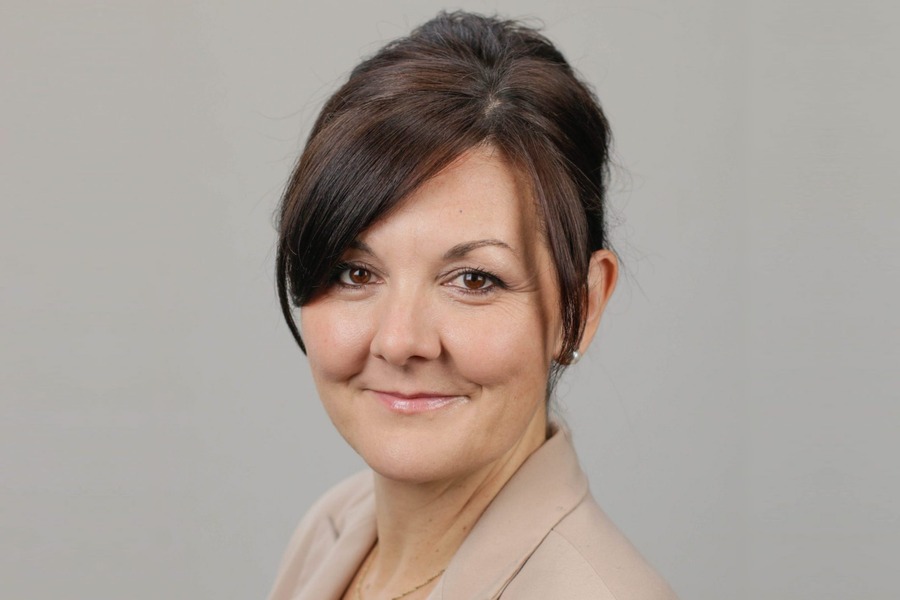
Guest Speaker
Amy Widdows
Amy is the Chief Executive Office of the Ontario Disability Employment Network (ODEN). She is a committed connector who is passionate about inclusive employment and using collaboration, relationship development and capacity building as tools to increase employment opportunities for people who have disabilities. She is a strong support professional, skilled in Non-profit Organization Management, Inclusive Employment, Social Enterprise, Community Development and Disabilities.
Amy brings a breadth of over 20 years of knowledge and experience to the team working in Management roles in both not for profit Developmental Service Organizations as well as private sector Professional Employment Services. Amy’s vision for an inclusive Ontario is what guides her to break down barriers and discover people’s gifts and talent.