
Season 01 | Episode 13: Accessibility and Workplace Education
In this episode: David and Sandi talk with Sam Sinjari, community builder, speaker, and advisor. Sam’s mission is to highlight that small actions can lead to significant changes, promoting a more inclusive and empathetic society.
Transcript
David: Welcome to Practical Accessibility Insights. I’m David Best, and with me is my co-host, Sandi Gauder. Hi Sandi.
Sandi: Hi David. How are you doing today?
David: I’m good, thank you. And are you enjoying the summer weather?
Sandi: I am. It’s another beautiful day in the neighborhood. No complaints here.
David: I love it, but the days are slipping by too fast.
So this is episode 13, the last in our season one. We’ve completed one season. And it’s the fourth episode in our series on education. In our first part, we did K 12, then we did high school, university. And now we’re looking at education in the real world, the workplace, and in the marketplace.
And the big challenge for young people is the jump from the education institution to the workplace and how they’re treated. How do people with disabilities fit into the workplace? How do they continue their education? How do people in the workplace, business owners and managers understand the needs of people with disabilities? And so on. So we have someone today who’s gonna help us understand how people relate and communicate with each other.
So Sandi, why don’t you go ahead and introduce our guest for today.
Sandi: I’m happy to introduce Sam Sinjari, who is joining us today from the lovely city of Windsor. Hi Sam.
Sam: Hi Sandi. Hi David. Thank you so much for having me.
Sandi: Before we get into all the nitty gritty, maybe you can tell our audience a little bit about yourself.
Sam: Absolutely. My name is Sam Sinjari. I am from Windsor, Ontario. Over the years I’ve worked in business, volunteered nonprofit world, spoken at events, but what matters to me is helping people. That’s what empowering kindness is all about. It’s not a company or a program. It’s a reminder that small actions can change lives.
Whether I’m mentoring youth, supporting local charities, or speaking at community events, I try to help people realize their value and use it to help others.
Sandi: That sounds like a great undertaking, and I’m sure there’s lots of people out there who could use that kind of support. So what does empowering kindness actually mean and who is it that you’re generally speaking to?
Sam: Empowering kindness started as my personal way of approaching life, but over time it became a message I share with others. My audience is simple. It’s anyone who wants to make a difference but doesn’t know where to start. That includes young people who feel overlooked, community members who wanna help but don’t know how, and business leaders who think leadership is only about profit. Empowering kindness is about showing that leadership starts with compassion and success. It’s not about what you achieve, but how you help others succeed.
David: So Sam, I think one of the problems that I quite often encounter is that kindness kills. When you’re in the street or in the marketplace, there’s people that really do wanna help. But quite often their kindness overwhelms me and I just say, leave me alone. How do you get around trying to be kind and yet not interfere with what people are doing?
Sam: Well, everyone you meet is carrying something, so you have to lead with patience. You can’t create change from the top if your heart’s not in it at the bottom.
And we have to remember that, you know, kindness costs nothing, but it changes everything. And being patient and mindful because you don’t know what people are going through. If there’s one truth I’ve learned in life it’s that the most powerful force on this planet, it’s not money, fame or intelligence, it’s kindness.
And not the performative kind, and not the kind that we post online for likes. I’m talking about the kind of quiet, consistent kindness that shows up when no one’s watching, and that’s what I’ve built my life around. I come from a place where very little was easy. I’ve seen struggle up close, not just financially, but emotionally, and I know what it’s like and it feels like to go unnoticed.
I know what it means to be capable but overlooked, and I carry that with me in every room I walk into. Over the years, I’ve found myself drawn to people who feel like they don’t belong anywhere. Youth who are trying to figure life out. Families who just need a break. Organizations who are doing good work, but don’t have the support or resources to keep going.
That’s where I show up quietly, consistently, without needing credit. I’ve worked with food banks, shelters, mentorship programs, and frontline organizations that serve people who are often forgotten by the system. I’ve helped deliver meals, funded radio campaigns to raise awareness for causes like crime stoppers and youth services, and donated board games to foster homes.
Not because it’s grand, but because I know what it means for a child to feel joy when their world is unstable. I do it not at a charity, but out of responsibility because when you’ve lived through darkness and found a way out, you owe it to others to bring a light. That’s what led me to start the Empowering Kindness Radio show.
It’s not a platform for self-promotion. It’s a platform for real people doing real work. Community leaders, volunteers, nonprofit champions, and people who don’t always get recognition, but show up anyway. Every episode is a reminder that no act of kindness is wasted, and that leadership doesn’t always look like a podium.
It can look like a packed lunch, a listening ear, or a voice that says, I believe in you. My goal with the show is to help listeners feel something, to reconnect people with what matters, to remind them that change doesn’t start with politics or policies. It starts with how we treat each other. Yes, I’ve worked in business, I’ve had titles, but that’s not who I am at the core.
That’s just part of the toolkit. My purpose is bigger. My legacy will not be about revenue or recognition. It’ll be about how many people felt seen, supported, and strengthened because I choose to show up with kindness. And empowering kindness isn’t just something I say, it’s who I am. It’s how I live, and I hope it’s what I leave behind David.
David: So I guess the key there is you have to ask yourself, what is my motive in performing an act of kindness? Is my motive to satisfy my own pleasure that I’ve done something good? Or am I doing it because I think somebody needs that help?
Sam: I think kindness is contagious. You know, you start it and you watch what happens.
You know, your presence could be someone’s turning point. A strong community is built one small act at a time, especially when you give unconditionally. Right? And if you want to build trust, you gotta show up consistently and uh, keep the kindness of hearts for sure.
Sandi: So what kind of advice would you give to a recent graduate who’s now heading out into the world, hoping to start a career?
They spent, you know, a number of years focusing on something they’re passionate about and interested in, and now they gotta face the great big real world and get a real job. It’s not easy under the best of circumstances, but it can be just a little bit more challenging for someone with a disability. So what kind of advice would you have for somebody like that?
Sam: The biggest barrier people with disabilities face isn’t always physical. It’s being misunderstood, ignored or underestimated. Through Empowering Kindness, I challenge that indifference by encouraging conversations that are honest, respectful, and human. It’s not about speaking for people, it’s about listening to them, seeing their value and creating space where they can thrive.
Uh, when we lead with kindness, we start to see that ability where others only saw limitation. So, it’s important for every young person, someone who sees potential in them. You know, sometimes a simple “I believe in you” can change their entire future. And empowering you doesn’t mean rescuing them. It means equipping them.
When I mentor, I mentor because someone took the time to mentor me, and you don’t have to save the world. You just don’t wanna ignore the people that are struggling.
David: How do you know though what you’re doing is helpful or you’re actually being a hindrance?
Sam: Well, you always wanna be mindful and respect people’s autonomy.
So it’s always good to watch for body language, watch for how people react to your kindness. Also, you wanna give with dignity and respect. You don’t want people to feel uncomfortable with your kindness. So it’s very important to have a conversation, you know, would you like this? Can I help you with this? May I, you know, sometimes leading with permission a little bit could help, right?
Accessibility starts with listening, you know, not just assuming, right? And if you truly care, you’ll ask. You just won’t guess, right? So you don’t need to have the answers of what’s right or wrong. You just need the humility to care.
David: Absolutely. Communications is the key. Ask questions. Don’t be afraid to ask somebody if they need help.
Sam: And don’t be offended if they say no.
Sometimes, you know, people really want their autonomy and they want to figure it out themselves and have to be mindful and respect that. For sure.
David: So in your travels, you’ve done a lot of speaking at organizations and your radio show. What do you find has been the biggest challenge you’ve encountered? Is there pushback on what you’re saying or do people challenge you on that?
Sam: For most of the environments I’ve been in, people have been very understanding and welcoming with it. There hasn’t been any pushback that’s been presented to me, but I’m sure there always is, is sometimes people don’t say anything, right. But I always encourage conversations.
David: Do you do any presentations within the corporate world?
Sam: I have been invited to many organizations to do like speaking. It’s always been a great experience.
Sandi: What seems to have the most impact in the conversations that you have with people or the presentations that you give?
Is there one thing that you say that seems to hit home more often than anything else?
Sam: Well, I think that, you know, real leadership means asking who’s not in the room and doing something about it, right? If you’re in a position of influence, inclusion, it’s your responsibility as a community leader to go beyond policies and make effort to engage, invite and listen.
It can be as simple as consulting with people who live with disabilities before making decisions that affect them, and kindness turns into intention, into action and action into impact, and that’s how we lead inclusively.
Sandi: What do you think leaders can do to be more inclusive and supportive for people with disabilities?
Sam: The simplest act can be the most powerful. So I think starting by noticing someone you do usually overlook, you know, say hello, make eye contact, treat people like they matter because they do. We don’t need to wait for a big moment to make a change. It happens in everyday choices. Inclusion begins when we decide to stop walking past people and start walking with them, and that’s the heartbeat of Empowering Kindness.
And it’s all about having the empathy and care to help one another.
Sandi: What role do you think DEI policies play in organizations when it comes to empowering kindness?
Sam: I think a lot of organizations treat DEI as a policy to follow, not as a value, to live. Empowering Kindness is different. I focus on human connection, not checklists.
Uh, to me, inclusion should come naturally from valuing people for who they are. It’s not about filling quotas, it’s about asking who are we missing and whose voice we should hear? Because kindness is not political, it’s personal. And when you lead with kindness, you automatically create spaces where people feel they belong.
Sandi: And have you had these kinds of conversations with business leaders around DEI? And the fact that it goes beyond just being an acronym and a policy.
Sam: Absolutely. You’d be surprised how many leaders actually do believe in that, and it’s one of the things that they focus on. And uh, they’ve had very, very positive conversations about that.
David: So have you had any kind of experience though, where there’s a gap in what is said and what is actually done? When you talk to business leaders that talk about, we believe in inclusion, and then you talk to management and they say, yeah, the company believes it, but I as a manager don’t have the resources.
I don’t have the time. I’m not given the training, so I can’t meet all of the demands. Have you come up with any kind of challenges, the gap between management and corporate leaders?
Sam: I think you’re right. I mean, you could build a ramp, but if the mindset is inaccessible, the space still isn’t welcoming, then you know, we gotta remind leadership of that, right?
So people should always feel welcomed. It’s not about just having accessibility environment, right? People should feel included and constantly have DEI training and also doing it with humility so people don’t feel isolated or left out or feeling uncomfortable about it. For sure.
David: Well, I think it’s more about accountability.
I mean, it’s one thing to say we have an inclusive environment, but how do you enforce accountability without being an over-demanding boss? One of the biggest challenges we have in our society is accountability. I think people wanna do the right thing, and people are so overwhelmed with the technology age that accountability and values get pushed to the wayside in order just to meet the demands that are on us daily.
Is there any kind of idea you have, Sam, where we can help managers and senior leaders come to an understanding of each other?
Sam: I think more training and I think having training given from people with that background and experience and life experience or people who have lived that experience rather than people who have just possibly studied it or read manuals.
And given that, I think learning a lot more from life experience and real impact of people who have worked in those sort of environments or have survived certain situations. I think that sort of value would be a lot more effective than just what people feel is right, because it’s written down in a book that they’re told to memorize and present.
I think having that personal connection or listening to the stories can really help people understand more of what people have gone through.
David: Yeah, I agree with you, and I think one of the biggest missing elements is the story. Everybody’s got a story, and I think in the business world, everybody’s an expert and they think they know what they’re doing and they don’t bother to stop and listen to what the story is, whether it’s the customer or whether it’s a an employee. We need to take the time to stop and listen and really understand what the real life experience is all about.
Sam: A hundred percent.
David: Do you have any real life examples of when you spoke somewhere and someone came up to you and said, this has changed my life, or I did something and it really made a big difference?
Sam: We sometimes get that, but I think with some of the kindness that we do, we never can measure that. You never really know what people are going through or what you said could have impacted someone in a positive way. So it’s very hard to measure that. And sometimes when people are impacted, sometimes they’re, they’re embarrassed to reach out or they don’t, and, uh, you don’t hear about that sometimes till years after or much later.
Sandi: We often talk in, well in digital accessibility in particular, about accessibility being a journey. It’s, it’s ongoing. It’s so when you do something today, you don’t know what that impact will be down the road. And you’re constantly changing, constantly evolving. So that sounds similar to what you just described.
You do something kind today, you don’t know when that kindness is actually going to have an impact on somebody or some organization.
Sam: Exactly. Impact isn’t always something you can measure. You know, it doesn’t always show up in numbers or get posted on social media. Sometimes the most powerful things we do, the kind words, quiet support, the simple act of showing up go completely unnoticed by the world.
But then they stay with someone forever, and you might never know that your kindness kept someone from giving up that day. You might never hear the story of how a small gesture gave someone the strength to keep going. But that’s the point. Real impact is often invisible, and that’s why I keep going. You know, it’s never for the applause or for the metrics, but for the people whose lives shift quickly because someone chose to care.
David: I guess that’s hard for business leaders to swallow because they’re very focused on metrics.
Sam: You’re absolutely right. For a lot of business leaders, kindness and inclusion does feel hard, and it’s not because they don’t care, but because the system rarely rewards it. They’re trained to focus on performance, numbers and outcomes, not present, empathy or people who move at a different pace.
In fast moving environments, taking the time to listen, build, trust, or create space for someone who thinks differently, can sometimes feel like a risk. But the real risk is actually ignoring it. When leaders overlook humanity, they lose loyalty. You know, they lose creativity. They lose that long-term strength. What the Empowering Kindness offers is a different lens.
It shows that leading with heart doesn’t always mean lowering standards. It means raising the bar for how we treat each other on the way to success.
Sandi: Do you think we’ve become more or less kind as a society? You’re talking to people all the time about being kind. Do you think we’re getting kinder or do you think we’re getting meaner?
Sam: I don’t believe we’ve become less kind. I think we’re just more distracted, more overwhelmed, and more disconnected. The kindness is there. I think it’s just quieter now. It shows up in everyday people doing small things behind the scenes. Neighbors checking in and strangers paying for someone’s coffee at a drive through, in community volunteers who keep showing up when no one’s watching.
The problem isn’t that kindness is gone. I think it’s that it’s not highlighted as much anymore, but it is alive. It’s real. The moment that you slow down and look someone in the eye and actually listen, you realize people still care deeply. They’re just waiting for a reason to show it again, and I think some of the social medias and likes, it has to be extreme kindness for people to notice it or see it on their TikTok reels or YouTube shorts, right?
Someone’s giving away a car. Someone’s, you know, paying for someone’s vacation. Someone’s renovating someone’s entire house, right? Those are huge. Things that are done and sometimes done for publicity, but those are the things that get highlighted. But the smaller things that people do on the day-to-day, I don’t think are shown. It gives people the perception that maybe kindness is less out there.
But I think it’s there. I think we as humans in general, I think we’re very kind. I mean, uh, we’re complete strangers, you know, and we found a way to connect and we’re speaking right now about kindness, right? So I think it’s, uh, definitely there.
Sandi: You said something in there that struck me. When you’re listing all the little things that people do every day, like checking in on a neighbor or helping somebody with their groceries or whatever, I, I’m not sure we actually define that as being kind.
I think maybe that’s it. Maybe we don’t even acknowledge the kind things that we do every day because they’re so second nature to us. And maybe it’s because it’s so common. It’s the kind of thing people do all the time is be kind. Like you said, if if it’s not a big gesture, then it’s, it’s overlooked, but you’re probably right.
We probably are a lot kinder in general than we even give ourselves credit for.
Sam: Yeah, absolutely. I mean, we often hold the door for people. We let people go in front of us in lines, we smile at, uh, at one another. There’s a lot of things that we do do, and like you said, doesn’t feel like it’s enough because of the way we’re distracted these days.
David: If you read Statistics Canada report, you hear that there is a greater disconnect today, and they say a lot of it has to do because of the pandemic we went through. Secondly, they say it’s because the younger generation is so focused on mobile devices that they’re on their screen rather than talking with friends.
And they say according to their reports that more people today say they have no friends than they’ve ever had in the past, so there seems to be a real disconnect in society. And when I talk to nonprofit organizations, the leaders often say they can get businesses to donate, but quite often the businesses have no idea what that organization does.
So what is your take on the disconnect today and how kindness can overcome that disconnect?
Sam: I think you’re right. People feel more isolated than ever. And uh, mobile devices have made it easy to scroll through someone’s life without ever truly knowing them. We haven’t become colder as a society. We’ve just become more disconnected.
And a big part of that is how we use technology. Mobile devices, were meant to bring us closer, but what they’ve actually done is condition us to consume people instead of connect with them. We scroll through photos, watch stories, click like, but we rarely sit with someone and ask how they’re really doing.
And when we do reach out, it’s often through a screen, not across the table. The result is this strange illusion of connection where we’re surrounded by updates, but we’re starving for real relationships. And this is why many people say they feel like they have fewer friends, even though their contact list is full.
So it’s not about numbers, it’s about depth. And people don’t feel heard. They don’t feel known. The constant noise and comparison of social media have replaced quiet, genuine moments of human presence. And the more we scroll, the harder it becomes to slow down and connect in real life. And it’s not that people don’t want connection, it’s they’ve forgotten how to trust it and where to find it.
And even in business, we see this happening. Companies donating money, sponsoring events, golf charities, they post about the causes often. But there’s no real relationship behind the giving. It’s philanthropy without presence, and they’re supporting communities they’ve never truly sat with. And while the money helps, what people often crave more is actually who shows up, listens, and learns their names.
That’s where trust is built, and that’s the gap between us and them begins to close. So to overcome this disconnect, we need to remember that technology is a tool, not a substitute. And nothing replaces eye contact. Nothing replaces presence. Whether you’re a business leader or just a neighbor, it starts with small choices. Putting the phone down, asking real questions, slowing down enough to be present. And connection isn’t something we can automate. It’s something we need to commit to one conversation at a time.
Sandi: It sounds so simple. It sounds so obvious. It sounds so logical and yet it seems to be so difficult for us to do. I think we, maybe we’ve lost some skills with the advent of technology and maybe we need to find a way to get those skills back.
And certainly people like yourself who are trying to promote kindness. That can’t hurt, so, so hopefully that that leads people to start thinking twice about some of the things that they do every day, or how they connect with people or the way they connect with people.
David: Sam, I wanna thank you so much for joining us.
I love your passion. I love your message. I think it’s something that we need to hear more about. When I work in the community as a accessibility advocate, quite often I get people saying how wonderful it is and it’s great idea, but I never see any action and I would love to know how we convert words to action.
So I appreciate you taking the time to come and talk to us and empowering us to be more kind. Do you have any ideas where people can contact you or reach out for more information?
Sam: Yeah, you can visit my website, SamSinjari.com. That’s S-A-M-S-I-N-J-A-R I.com.
Sandi: So when we, in every episode, we ask our guests a simple question, or at least we think it’s a simple question.
What’s one thing that people can do today that will help the world move forward, become more inclusive, more accessible, and more kind?
Sam: If I could leave people with one piece of advice, it’s this. Get back to humility. Real grounded humility, the kind that listens before it speaks. The kind that admits it doesn’t know everything.
The kind that doesn’t need to be a hero just needs to be helpful. We’ve lost a bit of that in today’s world. Everything’s about personal branding, being right, being seen, being first. But humility is what creates room for others. It’s what allows us to grow, to learn, to collaborate, and that’s what gives kindness its true strength.
The reason humility is hard is because it doesn’t come with an applause. It means being okay with not getting credit. It means helping even when no one sees it. But that’s exactly why it’s powerful because when you lead with humility, people feel safer around you. They feel healed, they feel heard.
And more likely to rise. We don’t need just louder leaders, we need kinder ones. We need people who lead with quiet strength and steady hands, and that starts with humility. If we wanna see a more connected, compassionate, inclusive world, we can’t just hope for it. We have to model it. We have to show the next generation that kindness is not weakness.
It’s a skill, a discipline, a responsibility, and something that’s worth practicing every day. Because at the end of the day, it won’t be the loudest voices or the biggest titles that change the world. It’ll be the people who choose to show up with humility, compassion, and lead with love.
Sandi: That’s great advice.
So thank you Sam, so much for joining us today. It was great to hear about your views on kindness and how we can help support each other and make this world a better place. So thank you again for taking the time to chat with us today.
Sam: My pleasure. Thank you so much.
David: The views, thoughts and opinions expressed on this podcast.
Are the speakers own and do not necessarily represent those of the podcast team and partners. This podcast is for information and learning purposes only. The Practical Accessibility Insights podcast is hosted by CMS Web Solutions. The intent of this podcast is to raise awareness for practical advice and strategies for making digital and physical environments more accessible to everyone.
Thank you for joining us in this time of discovery and sharing for a more inclusive society. If you have questions or comments, you can email us at info, I N F O, at david dot best or Sandi, S A N D I, at CMS Web Solutions dot com. For more information and resources, go to www.CMSWebSolutions.com or www.BestAccessibility.consulting.
Guest Speaker
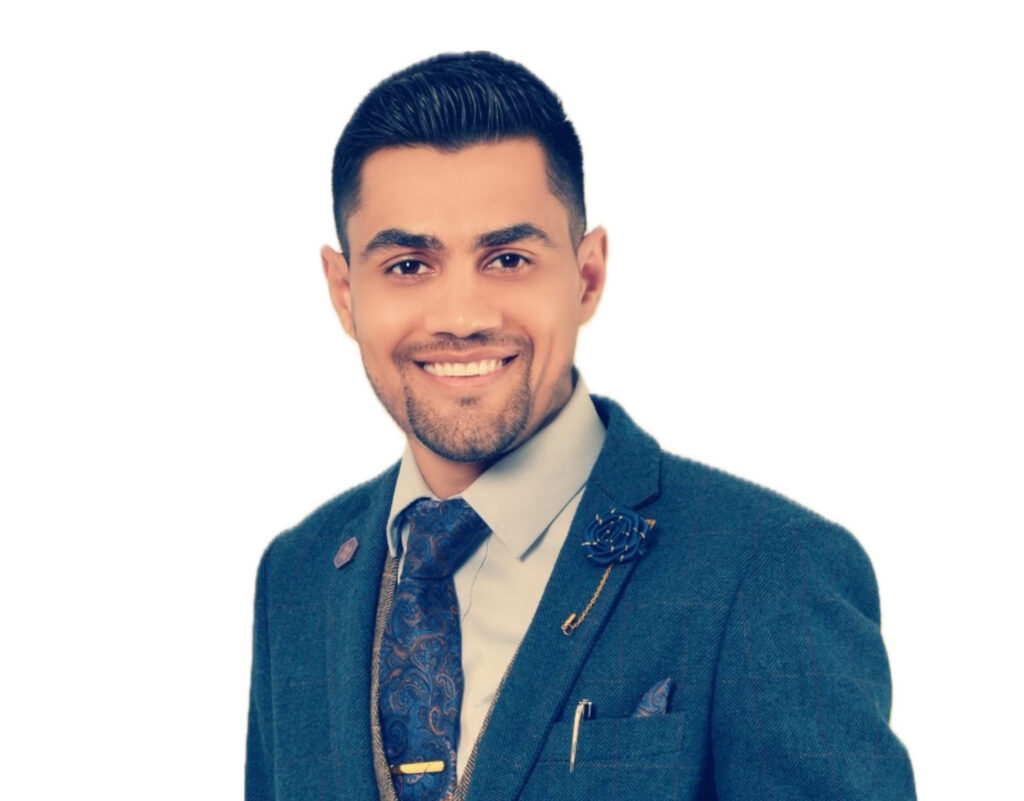
Sam Sinjari
Sam Sinjari is a Windsor-based community builder, speaker, and advisor. He has spent over 18 years in automotive finance and now focuses on helping nonprofits, small businesses, and social enterprises grow through strategy and service.
Sam is the founder of Empowering Kindness, a local radio show that highlights community leaders and urgent needs across Windsor and Essex County. He serves on several boards, mentors youth, and has personally helped deliver thousands of meals and resources to families in need. Everything he does is grounded in real action, not talk.